For those youngsters inclined to humour, and who have not yet discovered Yossarian, Major Major Major Major and the magnificent absurdity of bureaucracy disguised as logic, there is a certain uncomfortable familiarity in the world of aviation. It begins with the promise that becoming an airline pilot is a profession built on merit, discipline, knowledge and competence, and then immediately introduces the small matter of having to find a considerable fortune merely to enter the examination hall.
There was a time when becoming an airline pilot was understood to be much more than getting a job. It was supposed to be a test of character, discipline, judgement and absolute competence. The uniform carried weight, the licence carried responsibility, and the cockpit was understood to be the one place where reality had no interest in your surname, your social standing, your connections or your LinkedIn profile. Unfortunately, somewhere between the dream of flying and the business of aviation, we have managed to create a rather elaborate catch 22 in which the youngster is first asked to invest everything he has, then to master an enormous body of knowledge that cannot possibly be reduced to passing examinations, then to find the right flying school, the right instructor, a serviceable aircraft, reasonable weather and sufficient aircraft availability, and finally to discover whether there is a job waiting for him at the end of the runway.
The flying school experience itself can sometimes resemble an endurance sport disguised as professional training. The student arrives ready to fly and discovers that the aircraft is under maintenance; the aircraft becomes serviceable and the instructor goes on leave; the instructor returns and the weather becomes unsuitable; the weather improves and the aircraft develops another problem; and, after all this, the student is gently informed that his flying hours are insufficient and that a few more hours would be advisable. Aviation therefore manages the remarkable feat of making a young person pay repeatedly for the privilege of discovering that he cannot fly.
Yet, strangely enough, excellent pilots emerge from this system. Some come from gleaming academies with impressive facilities and simulators that look capable of flying to the moon, while others emerge from flying schools where aircraft availability is treated almost as a philosophical concept and where simply completing a sortie feels like an operational achievement. Perhaps that is one of aviation’s great mysteries: competence often emerges despite the system rather than because of it.
The young pilot then enters the airline world and encounters another wonderful principle: apparently everyone is equal. On paper, that sounds excellent. In reality, aviation has a rather complicated relationship with the word “equal.” One pilot may arrive with a few hundred hours, another with several thousand, and yet the moment they enter a new training programme, both are reminded that the aircraft has its own rules and that previous experience, while valuable, cannot simply be carried across like excess baggage. A pilot who has spent years mastering one fleet can move to another and discover that aviation has politely pressed the reset button. The knowledge remains, the judgement remains, the experience remains, but suddenly the aircraft says, “Thank you very much. Please start again.”
It is one of the few professions where a person can spend thousands of hours mastering a sophisticated machine and then, after changing fleets, become a very experienced beginner. The irony is particularly entertaining when the senior pilot who has spent years making decisions in one aircraft suddenly finds himself being corrected by a first officer who, in another setting, might have been asking him for career advice. It is humbling, occasionally amusing and, from a training perspective, entirely necessary.
The more serious divide, however, is not between aircraft types. It is between opportunity and access. There are those who finance their own training, save for every flying hour, negotiate with flying schools and learn resilience largely through bank statements, and there are those whose path is considerably more comfortable because family resources, institutional pathways or established connections have removed some of the obstacles. Neither background automatically produces a better pilot. Money cannot buy judgement, and poverty cannot manufacture competence. Military or structured institutional training can produce exceptional discipline, while civilian training can produce equally exceptional aviators. The real question is whether the system ultimately distinguishes between the two on the basis of what actually matters: competence.
That is where the industry’s uncomfortable catch 22 begins to emerge. Aviation proudly presents itself as a meritocracy, complete with aptitude tests, technical examinations, psychometric evaluations, interviews, simulator checks and increasingly sophisticated assessment systems. The process can appear so rigorous that one might imagine every candidate is being individually examined for a mission to Mars. Yet somewhere between the assessment centre and the cockpit door, another invisible checklist can sometimes appear: who knows you, who knows your family, who can recommend you, who can make a telephone call and, perhaps most importantly, who is already inside the circle.
There is nothing inherently wrong with professional relationships. Aviation is a small industry and people naturally know one another. The danger begins when familiarity becomes a substitute for competence, when influence becomes more valuable than performance and when proximity to management becomes a career advantage that the formal assessment process never intended to create. At that point, meritocracy develops a VIP lounge.
And the problem becomes even more serious after selection. Once inside an organisation, pilots can become part of informal ecosystems in which visibility, relationships and proximity to decision makers begin to influence opportunities, promotions and protection. The technically strong pilot who keeps his head down may remain invisible, while the politically well connected individual can become remarkably difficult to challenge. One person knows the aircraft; another knows the people who decide who gets to fly it.
This is where aviation must be particularly careful, because the consequences of getting the balance wrong are fundamentally different from those in most professions. A poor appointment in an office may cost a company money, reputation or a few months of productivity. A poor appointment in a cockpit can place hundreds of lives in the hands of somebody whose competence may not match the responsibility.
The aircraft, rather inconveniently, has no interest in office politics. The weather does not care who recommended the pilot. An engine failure does not recognise social status. And an emergency checklist has never stopped halfway through because the person holding it happened to be a senior executive’s favourite.
That is why the responsibility of the CEO and the Head of Safety extends far beyond manuals, audits, reports and compliance statistics. They must also examine the culture that exists between the lines of those documents. Every organisation develops habits, tolerances and informal rules, and sometimes the most dangerous safety problem is not a broken component but a senior individual whose decisions, blind spots or tolerance levels gradually make unacceptable behaviour appear acceptable.
The real safety audit therefore has to ask a much more uncomfortable question than “Are we compliant?”
It must ask:
“What have we learned to tolerate?”
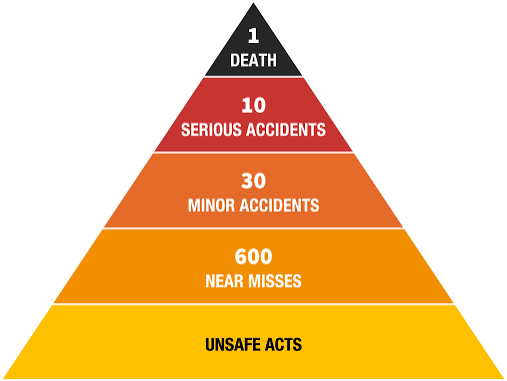
Because major failures rarely arrive without warning. They are usually preceded by small deviations that were observed, discussed and eventually dismissed. The phrase “nothing happened” is particularly dangerous in aviation because it can become an unofficial licence to repeat the same behaviour. Nothing happened yesterday. Nothing happened last week. Nothing happened the last ten times. Then, eventually, something does.
That is how safety cultures deteriorate, not necessarily through one act of negligence, but through hundreds of small compromises that gradually become normal.
Even professionalism can disappear this way. The loosened tie is not the problem. The fashionable accessory or ear stud is not the problem. The casual posture is not the problem. A perfectly pressed uniform does not make a competent pilot any more than an untucked shirt makes somebody incompetent. But visible discipline can often be a reflection of invisible discipline, and when small deviations are consistently ignored, standards begin to soften. The problem is not the sunglasses; the problem is whether the organisation has also become comfortable looking away.
This becomes particularly important when serious questions arise about fitness to fly, medical findings or substances detected in a pilot’s bloodstream. Such matters must be investigated scientifically and without prejudice. The finding itself is only one piece of the puzzle. What matters is what it means, how it came about, whether it was known, whether it was reported, whether existing safeguards should have detected it, whether previous indicators existed and, most importantly, whether the organisation ever identified this threat and responded appropriately.
The purpose of an aviation investigation should never be to find the most convenient person to blame. It should be to understand the chain of events and prevent recurrence. That means following the chain backwards, from the cockpit to training, from training to selection, from selection to supervision and from supervision ultimately to leadership and culture.
The uncomfortable question is therefore not merely, “What did the pilot do?”
It is also, “What did everyone else fail to notice?”
That is the question that separates a genuine safety culture from a public relations exercise. The aviation industry must also be honest about what it tells its young pilots. If we continue to tell them that aviation is purely a meritocracy while money, influence, familiarity and proximity determine who receives opportunities, who gets promoted and who gets protected, then we are not operating a meritocracy. We are operating a meritocracy with a VIP lounge, and everyone sitting inside it eventually convinces himself that he earned the seat.
There is nothing wrong with wealth, privilege, ambition or connections. A wealthy person can be an exceptional pilot, and a person of modest means can be a terrible one. The issue is not where someone comes from. The issue is whether the system has the courage to judge where someone is going on the basis of competence.
Because ultimately aviation has one brutal advantage over every corporate hierarchy ever created: gravity is completely impartial.
At 35,000 feet, influence does not matter.
Connections do not matter, Surnames do not matter, Social standing does not matter, Confidence without competence certainly does not matter. There are only the aircraft, the procedures, the crew, the passengers and the decisions being made in real time.
That is the final examination, and unlike every written examination ever conducted, it does not have an answer key printed at the back. When everything is working, almost anybody can look competent. It is when weather deteriorates, systems fail, workload rises and the carefully rehearsed plan begins to unravel that the truth finally appears. And when that happens, the aircraft does not ask who you know. It asks whether you can fly.
That is why the cockpit cannot become a clubhouse, a networking opportunity or a reward for proximity to power. It must remain what it was always supposed to be: the final place where competence matters more than connections. Because eventually, after the money has been spent, the introductions have been made, the favours have been exchanged, the promotions have been granted and the photographs have been taken, aviation reduces everything to one brutally simple question:
When everything goes wrong, can you still fly?
That is not elitism, That is not bureaucracy, That is not club culture, That is simply the difference between theory and gravity.
And gravity, unlike almost everyone else in the aviation industry, has never been impressed by anything at all.
Captain Akshay
14 August 2026