WHEN PROTECTORS TURN PREDATORS
On 30 Sep 2026, Capt. Smit Machchhar did the unthinkable! He averted a suicidal attack from a rogue co-pilot who wanted to achieve a sensational 9/11 redux over Israel. Injured, bleeding and disoriented from the copilot’s assault, Capt Smit, the de-facto first responder, displayed exceptional character, courage and presence of mind to save invaluable lives. While there were many heroes in the story, Capt Smit remains the “X “ factor. Had Capt Smit not fought back, displayed the presence of mind to open the cockpit door, the others may have remained mere mute spectators to the catastrophe.
This “first of its kind” event brought back horrifying images of the bonechilling 9/11 attacks. The intention of the perpetrator was exactly the same! However, there was a subtle but an important difference between the two events. In the 9/11 attacks, the terrorists stormed the cockpit and took control of the aircraft; in this case the terrorist was already inside the cockpit. The wolf in the sheep’s hide was waiting patiently inside the fortress across the cockpit door to do the unthinkable. He almost did!
While Capt Smit’s courage is being celebrated across the pilot community and aviation industry as a whole, the fact remains that the perpetrator of this horrifying act was also a pilot… one of us! Pilots have a unique bond in the cockpit, together they plug the holes, trap the errors and always ensure safety. The industry nomenclature for this bonding is Crew Resource Management(CRM). Often pilots come together for the first time just before the flight, with no background knowledge about each other and yet perform their assigned tasks diligently, follow orders and instructions as per company policies and watch out for each other just like a walk in the park. The company policies and standard operating procedures facilitate this efficiency. However, there is that “X” factor that bonds the whole setup together….TRUST! On 9/30 the bond of trust was broken! The copilot who was supposed to watch the Captain’s back…….stabbed him in the back!!
Many Industrial measures were in place to prevent such a disaster, many more would already have been suggested by the Industry Gurus and Pundits. However, Industrial measures are often reactive in nature and may not be adequate to prevent the next incidents, especially the kind we witnessed on 9/30. The steeled resilience of mischief creators will keep looking for loopholes in the system and ways around the system to make it work the next time. Perhaps it’s time for greater involvement of the people who are at the centre of it all and often the first respondents…. pilots and cabin crew.
“ First of its Kind”
The sight of an airplane in flight is a sight to behold….. and the sight of an aeroplane crashing and burning is bone-chilling ! No wonder it is a perfect weapon for the terrorist as the “propaganda dei fatti” or “Propaganda of the Deed” is instantaneous and far-reaching.
Since the turn of the 21st century, the aviation industry has witnessed some sensational events that were unique and perhaps disruptive in their own way. The 9/11 hijacks in 2001, The Hudson landing by Capt Sully in 2011, The CFIT by a mentally unstable copilot of the German Wings Airlines in 2015 and the FlyDubai incident on 30 Sep 2026 stand out amongst them. Three out of these four incidents involved trained pilots deliberately crashing/attempting to crash fully serviceable airplanes.
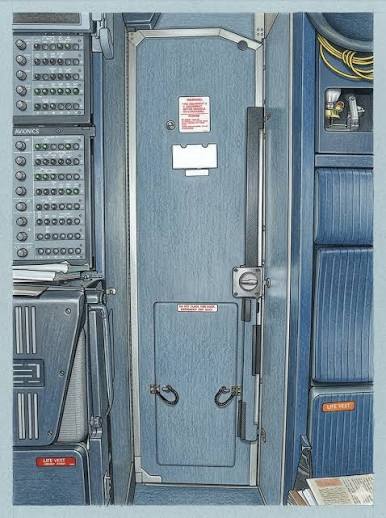
The 9/11 attacks gave a new dimension to terrorism. It exposed the vulnerabilities of airliners and the aviation security agencies went into top gear around the world. The Aircraft and Airline Industries’ reaction was to strengthen the cockpit door, enhance the operating procedure in flight, conduct intensive security screening and many more. The aim was to make the cockpit impregnable in air and It has worked thus far as no plane has been hijacked in similar fashion since. However, “The industry itself needs to recognize that flight deck door — whilst installed for very understandable reasons to prevent a suicidal hijacking by a passenger — has also created a fortress into which the good guys cannot gain access to a rogue individual, be it a hijacker or a rogue crew member”
The CFIT of German Wings Flt no 9525 on 24 Mar in 2015 wherein, the co-pilot locked the captain out of the cockpit and flew the aeroplane into the French Alps killing all on board proved how impregnable the cockpit had become. The locked out pilot could not re-enter the cockpit. A mentally sick pilot with suicidal tendenceies took 150 innocent lives to their death for no fault of theirs.
Aviation authorities swiftly implemented new recommendations from the European Union Aviation Safety Agency(EASA) that required at least two authorised people to be in the cockpit at all times. However, by 2017, this rule had been dropped in Europe. While many countries based on their threat scenario are continuing to follow this rule in both letter and spirit, it perhaps needs a revisit and must be enforced globally.
These two incidents brought about revisions/ corrections in the industry methods to pre-empt, prevent recurrence and trap the threat before it could result in a catastrophe. However, the 9/30 Fly Dubai flight 1073 incident poses different and more complex challenges. Fixing this will not be easy and would require more than the standard Industrial measures to prevent recurrence.
A perfectly normal person with a boring regular life can suddenly be transformed/ radicalised and become a threat. What could be worse than one pilot going rogue… TWO! What if both pilots had alignment of thought?!!!!
Industry Measures
Such acts of terror involving an aircraft and passengers can signal doom for the airline and the ripples would be felt across the industry. Hence it is rational for the industry to react and respond with immediate and long-term measures to plug the security gaps always and every time.
Robust screening during recruitment, diligent psychological analysis, regular training and orientation programmes, social media scanning and monitoring are immediate measures that have either been strengthened or instituted by airlines across the world. These measures will mitigate the threat to a large extent. But can these measures trap rapid radicalization of a perfectly normal looking individual.
Airlines: The Global Village
An airline with employees from across the world is a global village in the true sense. A real melting pot where Expats cross the chasm of varied culture, colour, religion and language and ideology to form wonderful teams under one umbrella provided by the airline. While it’s an environment to bond across barriers, it also has the potential for conflict when ideological leanings of polarised minds become overbearing. As the world discovered on 30 Sep 26.
In a fragmented world at war for various reasons, “breaking news” transmitted instantly by the social media catapults the polarised minds into the world of vengeance…. accelerating the desire for a violent revenge! Exactly what the rogue elements are looking for…. a volatile, angry and polarised mind ready to take revenge at any cost! Such a person gets classified as a “short-term disposable asset” that can and must be exploited immediately. A radicalised flight crew is pure gold for such organizations!
Institutional measures and practices may not be able to trap such sudden and rapid change of thoughts, behaviour and intent. They can only be noticed, identified and called out by colleagues who interact with the person regularly and frequently….. The pilot and cabin crew colleagues. Therefore it is imperative that pilots and cabin crew are trained and empowered to trap such ‘assets’ before disaster strikes.They are the Last line of defence!
“How to Train the Dragon”
Mental Health First Aiders. Mental Health First Aid at Work is a customizable education program that helps your teams feel better, perform better and stick around longer.It starts with giving your employees the tools to help their colleagues and themselves — not just for today, but for long-term organizational growth.
Pilots and cabin crew need to be trained in such programmes so that they can identify behavioral changes in colleagues, assist them and if need be raise the alarm in time. Many airlines have already adopted such programmes.
Building Bonds and Camaraderie. Airline crew have tough routines with almost round the clock operations. Although robust SOPs and operational principles ensure safe and efficient fight operations, the sense of belonging with the company and bonding with colleagues requires greater social interaction. Many companies invest in team building because strong workplace relationships directly affect productivity and employee retention. When colleagues know one another beyond their job titles, they communicate more openly, resolve conflicts faster, and collaborate more effectively on projects. Team-building activities create the foundation of trust that makes difficult conversations easier and helps teams navigate challenges together.
Airlines that incentivise and reward good deeds are able to extract greater loyalty, integrity and service from their employees. The more connected and proud one feels about his co-workers and company, the lesser the probability of protectors becoming predators.
Organizational employees can be classified into broadly four categories. Motivated but Ineffective (new joinees), Motivated and Effective (Trained workforce that is happy with company and hungry to grow), Demotivated but Effective (Workfire that has very little to look forward to from the company but continues to do their job safely) and lastly the Demotivated andIneffective (those who are dead meat and always pulling the organization down).
To be successful, most organizations look to have the largest members of their workforce in the second category..” Motivated and Effective”. Train the Motivated but Ineffective quickly and weed out the demotivated ineffective ASAP.
With passage of time and primarily based on company policies, silently, employees start slipping from the Motivated and Effective category to Demotivated but Effective category. This transformation often goes unnoticed as the routine work still gets done. But the erosion has started at the corners… It only comes to the fore when a crisis like the 26/11 siege of Taj Hotel or a FX1073 comes along. How the employees respond will be governed by their bond with the company and coworkers.
Pilot Unions. Yin or Yang? Boon or bane? Pilot Unions are double edged swords that cut both ways… for pilots as well as airlines.
Airlines tend to resist unions as such pilot unions possess immense collective leverage that directly impacts an airline’s bottom line, operational control, and management authority. The unions can push back pilot exploitation and in extreme cases lead to strikes; coercing management into submission to demands. How an airline embraces the idea of union is further driven by the national policies and culture.
From the pilots perspective, the union basically provides a protective umbrella against exploitation. However, the union rules and regulations also bind pilots into accepting terms and conditions that may not be in their favour at times.
In many airlines the pilot-airline relations are driven by the “swing of the pendulum” in the demand supply dynamics. Both sides tend to extract their pound of flesh! When pilot demand is high, pilots extract joining bonuses, lucrative contracts and hold airlines to ransom in extreme cases. When the airlines have their way, the pilots are driven into accepting hard contracts, lower salaries and even termination in extreme cases. Such a relationship breeds mistrust! it is fundamentally weak and lasts only until a better opportunity comes along! A sense of belonging and pride does not blossom in such an environment!
No matter where you stand on the idea of a pilot union, the fact of the matter remains that it provides a platform for both sides to benefit operationally, financially and collectively. If it prevents pilot exploitation, it also nudges the pilots towards efficiency and upholding of standards.
So to answer the question of whether Pilot Unions play a role in promoting and enhancing a culture of safety, efficiency and upholding of standards. The answer is a definite YES! Perhaps the pilot terminated from one airline for dangerous ideological leanings may not have found his way into the cockpit in another airline.
To Summarize
The world we live in is often classified using the acronym, VUCA… Volatile, Uncertain, Complex and Ambiguous! A large part of the human world is engaged in conflict; disparity in military might is offset using asymmetric options. A growing aviation industry was, is and shall remain a lucrative target for perpetrators of terror. As the industry continuously evolves to enhance safety and security, the perpetrators too are working relentlessly with equal fervor and passion. We need to win the race all the time…. without exception.
Although numerous checks and balances are in place and just when it appears that the probability of a hijack has been brought to a nought, a 9/30 comes along! While industry measures will continue to evolve and strengthen, the operating pilots and cabin crew can play a much bigger role in trapping such threats….. The perpetrators have penetrated into the community!
Trained, empowered and motivated, the pilots and cabin crew can prevent a recurrence. Together they can form a formidable last line of defence!
Anurag Sharma
References:
https://en.wikipedia.org/wiki/Carlo_Pisacane
The 9/11 terrorists who stormed the aircraft cockpits were also trained pilots!
https://www.nbcnews.com/world/middle-east/flight-attack-flydubai-aviation-security-measures-rcna601089
https://migflug.com/afterburner/two-person-cockpit-rule-explained-germanwings-easa
In the context of terrorism and intelligence analytics, a “short-term disposable human asset” refers to an individual recruited, coerced, or radicalized to perform a single, high-risk operational task with the explicit expectation that they will not survive the mission or remain viable afterward.Unlike long-term, high-value intelligence sources or embedded sleeper agents, these individuals are treated as completely expendable “one-off” tools to achieve an immediate tactical objective.
https://mentalhealthfirstaid.org/organizations/employers/
https://wearespin.com/how-do-corporate-team-building-activities-improve-workplace-culture/
https://www.youtube.com/watch?v=vnb_Ky8qvHI&t=189s
https://www.pmi.org/disciplined-agile/vuca-volatility-uncertainty-complexity-and-ambiguity