The demand for aviation training and related services is increasing and likely to grow in double digit. Asia-Pacific region has huge gap between demand and supply primarily due to insufficient training capacity in terms of infrastructure and staff shortage.
Blog
India: Building Aviation Simulator Infrastructure
Developing national flight simulator infrastructure is no longer a matter of convenience or cost-efficiency; it is a strategic national imperative. As India accelerates toward becoming a global aviation powerhouse, its ability to train, certify, and upskill thousands of pilots annually will define the safety, scalability, and sustainability of its aviation sector. Inadequate simulator access not only delays training and raises costs but also puts regulatory compliance and operational readiness at risk.
Leadership in Aviation: A Flight Crew Perspective: Part 2
“Dos and Don’ts” lists are helpful because they provide clear, concise guidelines for acceptable and unacceptable behaviours or actions in specific situations. This helps individuals understand expectations, avoid mistakes, and achieve desired outcomes by focusing on what to do and what not to do.
THE INDIAN TURBOPROP DREAM: THE PATH FORWARD FOR A REGIONAL TRANSPORT AIRCRAFT
India’s dream of building its own passenger aircraft is once again gaining momentum. At the centre of this effort is the Saras Mk2, a 19 seater plane designed by National Aerospace Laboratories.
Leadership and Teamwork in Aviation: A Cockpit Perspective Part 1
This Blog examines the principles of effective aviation leadership and its interdependence with teamwork, emphasising synergistic leadership, self-leadership, the trans-cockpit authority gradient, and CRM. Drawing lessons from historic accidents and successful case studies, it highlights how communication, responsibility, and mutual respect underpin safe and efficient cockpit operations.
The LCA and the Curious Case of India’s Flying Paradox
LCA Tejas is a 4.5 generation, all weather and multi-role fighter aircraft. The aircraft is designed to be a multi-role aircraft capable of taking up offensive air support, close combat and ground attack role at ease. It is also designed to undertake Ground Maritime Operations.
Final Salute
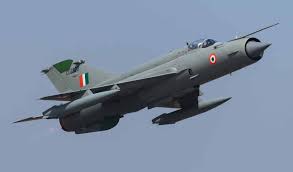
I am the MiG-21.I was not perfect. I had flaws, faults, and the scars that came with them.
But when India needed a supersonic sword in the sky — I was there.
For six decades, I protected India’s airspace like a devoted sentinel. To every technician who kept me flying through thick and thin, I bow with deepest gratitude — I am forever in your debt.
Now, the time has come for me to take my final flight.
I leave —not in silence, but with the thunder of duty fulfilled.
Old School Cockpit Discipline vs. New Age Rush: The Cost of Compromised Aviation Training
In the high-stakes world of aviation, training has always been the foundation of safety, confidence, and professionalism. It is what separates a licensed operator from a true aviator. In earlier decades, aviation training was an intense, methodical, and deeply personal process. Instructors did not just teach flying; they built habits, sharpened instincts, and cultivated a sense of absolute responsibility. Today, that golden standard faces erosion—driven by economics, demand, and an alarming shift in philosophy. The Legacy of Meticulous Instruction Training in the earlier days was a rite of passage. It…
Beyond the Flight Deck: Unaddressed Fatigue Triggers in India’s Civil Aviation Ecosystem
Fatigue is a general term used to describe physical and/or mental weariness something which extends beyond normal tiredness. Fatigue can also be described as a feeling of exhaustion, extreme physical and mental tiredness, or lack of energy that is not relieved by rest.
Air India’s AI187 Incident: A Triumph of Airmanship Amid Systemic Gaps in Weather Reporting
Pic Courtesy: https://www.easa.europa.eu/community/topics/windshear