India’s airports must move from monopoly-driven shopping malls with runways to passenger-first, safety-first public utilities. The reforms are neither radical nor unaffordable; they are overdue.
Glittering Terminals, Costly Journeys

Be safe. Fly Safe,
India’s airports must move from monopoly-driven shopping malls with runways to passenger-first, safety-first public utilities. The reforms are neither radical nor unaffordable; they are overdue.

Efficiency in commercial aviation directly drives profitability by improving the conversion of resources into revenue.

Imagine a machine that soars through the air with the grace of a bird, its massive overhead rotor spinning freely like a windmill, generating lift not from engine power but from the sheer force of oncoming air. This is the autogyro (or autogiro), a rotorcraft that ingeniously combines elements of airplanes and helicopters.
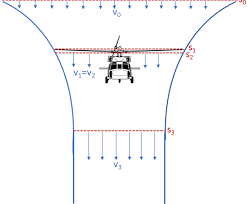
This article delves into the application of momentum theory to analyze helicopter rotor performance, from basic principles to practical design implications. We’ll explore how it models rotor flow, derives key parameters, and introduces the Figure of Merit as an efficiency metric. Along the way, we’ll highlight real-world applications, limitations, and future directions—all while keeping the discussion engaging and grounded in accessible
aerodynamics.

FADEC systems enable engines to operate safely with razor-thin surge margins by providing precise, real-time management. This article explores engine surge in depth, the critical role of surge margins, and how FADEC revolutionizes safe operation, drawing on real-world examples and clear analogies for aviation enthusiasts, engineers, and students alike.
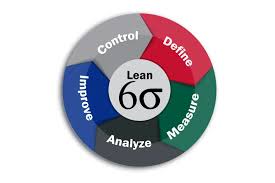
This article delves into how Six Sigma is applied in aviation quality control, illustrating its impact through examples, case studies, and insights into data-driven decision-making. It also addresses implementation challenges and strategies for overcoming them, underscoring Six Sigma’s role in elevating aviation standards.

This article delves into the strategic imperatives of indigenisation, the mechanics of the embedded MRO model, real and hypothetical case studies of public-private partnerships (PPPs), associated challenges, and actionable solutions. Ultimately, it explores how this approach can elevate India’s defence preparedness, spur economic growth, and enhance its global standing in military aviation.
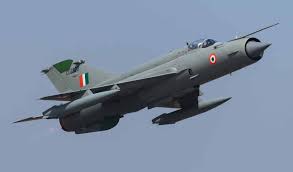
MiG 21. Farewell, old friend. You were never just another jet. You were the crucible in which warriors were made, and in your cockpit, I found not just my calling, but myself.

If you travel by air or working at airports, or for airlines, participating in this survey is important to improve safety of passengers, ground staff, support staff, cabin crew and pilots.
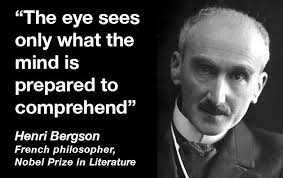
Birds and aircraft have most stubborn “airspace sharing agreement”; and one that no one actually signed thus leading to conflicts and bird strikes. The first recorded incident dates back to 1905, when Orville Wright, during a demonstration flight, collided with an unsuspecting bird. The world’s first powered flight pioneer thus also became the world’s first victim in an airspace sharing conflict – the bird strike.