Introduction
1. The aviation industry operates in an environment where the margin for error is virtually non-existent. A single defect in aircraft manufacturing, maintenance, or operations can lead to catastrophic consequences, including loss of life, financial repercussions, and regulatory scrutiny. To mitigate these risks, aviation organizations have increasingly turned to robust quality management systems. Among these, Six Sigma stands out as a data-driven methodology that aims to reduce process variation and eliminate defects, targeting a near-perfect performance level of 3.4 defects per million opportunities (DPMO).
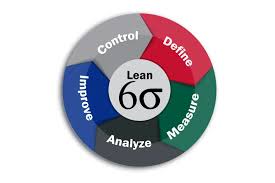
2. Originating from Motorola in the 1980s and popularized by General Electric (GE) under Jack Welch, Six Sigma is rooted in statistical analysis and continuous improvement. In aviation, it aligns seamlessly with the sector’s emphasis on safety, reliability, and efficiency. Regulatory bodies like the Federal Aviation Administration (FAA) and the European Union Aviation Safety Agency (EASA) mandate stringent quality controls, and Six Sigma provides a structured framework to meet these standards. By integrating principles such as DMAIC (Define, Measure, Analyse, Improve, Control), aviation firms can enhance processes, from engine assembly to flight operations, ensuring compliance while boosting operational excellence.
3. This article delves into how Six Sigma is applied in aviation quality control, illustrating its impact through examples, case studies, and insights into data-driven decision-making. It also addresses implementation challenges and strategies for overcoming them, underscoring Six Sigma’s role in elevating aviation standards.
Six Sigma Principles and DMAIC in Aviation
4. At its core, Six Sigma is a methodology that uses statistical tools to identify and remove the causes of defects, minimizing variability in processes. The goal is to achieve “six sigma” quality, where processes are so refined that defects are exceedingly rare. In aviation, this translates to safer flights, more reliable aircraft, and efficient operations, directly contributing to cost savings and customer satisfaction.
5. The DMAIC framework is the cornerstone of Six Sigma projects, providing a phased approach to problem-solving:
5.1. Define: This phase involves identifying the problem, setting project goals, and understanding customer requirements. In aviation, this might mean defining quality issues like delays in maintenance turnaround or defects in component manufacturing, aligned with safety regulations.
5.2. Measure: Here, teams collect data to establish baseline performance. Metrics such as defect rates, cycle times, or error frequencies are quantified using tools like process maps and control charts. For instance, measuring the frequency of non-conformities in aircraft inspections helps pinpoint inefficiencies.
5.3. Analyse: Data is scrutinized to identify root causes. Techniques like fishbone diagrams, Pareto analysis, and hypothesis testing reveal why defects occur. In aviation, this could uncover that poor supplier quality leads to part failures.
5.4. Improve: Solutions are developed and implemented to address root causes. These improvements are tested, often involving process redesign or technology upgrades.
5.5. Control: Finally, mechanisms are put in place to sustain gains, such as standard operating procedures (SOPs), monitoring dashboards, and training programs. This ensures long-term compliance and continuous monitoring.
6. In aviation, DMAIC enhances safety by reducing human error, improves reliability through consistent processes, and boosts efficiency by streamlining workflows. Data-driven decision-making is pivotal: instead of relying on intuition, aviation professionals use empirical evidence to make changes, minimizing risks and ensuring adherence to regulations like FAA’s Part 145 for maintenance organizations.
Implementation in Aviation Processes
7. Six Sigma’s application spans aircraft maintenance, manufacturing, and operations, where it tackles quality issues head-on.
7.1. In aircraft maintenance, Six Sigma addresses issues like unscheduled downtime or repair errors. For example, maintenance teams often deal with variability in inspection processes, leading to overlooked defects. Using DMAIC, a team might define the problem as high rates of repeat repairs on landing gear. Measurement could involve tracking defect rates via digital logs, analysis might reveal inconsistent torque application as the root cause, improvement could introduce automated torque tools, and control might include real-time monitoring software. This reduces defects, ensuring aircraft reliability and compliance with airworthiness directives.
7.2. In manufacturing, Six Sigma is used to minimize defects in component production. Aircraft parts, such as turbine blades, must meet exacting tolerances. A DMAIC project might target dimensional inaccuracies, surface cracks or material inconsistencies during manufacturing of turbine blades. By measuring defect rates and analysing variables like temperature and material quality, manufacturers can improve by optimizing process parameters, leading to fewer rejections and enhanced reliability. This data-driven approach not only cuts costs—potentially saving millions in scrap and delays—but also mitigates risks of in-flight failures.
7.3. For operations, Six Sigma optimizes processes like baggage handling or flight scheduling to improve efficiency. Airlines face challenges with on-time performance due to ground handling variability. A DMAIC initiative could define goals around reducing delays, measure turnaround times, analyse factors like crew coordination, improve through standardized checklists, and control via performance audits. This enhances passenger safety by ensuring timely maintenance checks and reduces operational risks.
8. Overall, data-driven decision-making in these areas reduces defects by focusing on statistical evidence rather than assumptions. For instance, using Six Sigma tools like regression analysis, aviation firms can predict failure modes, minimizing risks. Compliance is ensured through documented processes that align with ISO 9001 and AS9100 standards, fostering a culture of quality.
Real-World Case Studies and Hypothetical Scenarios
9. Real-world examples demonstrate Six Sigma’s transformative impact in aviation.
9.1. A notable case is GE Aviation, which has embedded Six Sigma since the 1990s. In one project, GE applied DMAIC to reduce defects in engine compressor blades. The Define phase identified high scrap rates due to dimensional inaccuracies. Measurement revealed a 15% defect rate, while analysis pinpointed machine calibration issues. Improvements included advanced CNC machining and real-time sensors, dropping defects to under 1%. Control measures like predictive maintenance dashboards sustained these gains, enhancing engine reliability and saving GE millions annually. This not only improved safety—reducing the risk of engine failures—but also ensured FAA compliance.
9.2. Another example is Boeing’s use of Six Sigma in the 787 Dreamliner program. Facing delays from supply chain defects, Boeing launched DMAIC projects to analyze fastener installation processes. Data analysis showed variability in torque application causing structural weaknesses. Improvements involved robotic automation, resulting in a 40% reduction in assembly defects and faster production cycles. This bolstered the aircraft’s reliability and helped Boeing meet regulatory deadlines.
9.3. Hypothetically, consider a regional airline struggling with fuel inefficiency due to inconsistent pre-flight checks. In a DMAIC scenario: Define targets a 10% fuel waste reduction. Measure tracks fuel consumption data. Analyse reveals pilot variability in weight calculations. Improve introduces AI-assisted checklists. Control uses ongoing audits. This could cut costs by 5-7% while minimizing environmental risks and ensuring compliance with emissions regulations.
9.4. Another hypothetical problem statement, AeroTech Engines, a fictional mid-sized manufacturer of turboshaft engines for military helicopters, faces challenges in their test bed operations. Recent audits revealed a 15% rate of test inconsistencies, where engines pass initial runs but fail subsequent ones due to fluctuating parameters like vibration levels or shaft horse power. This has caused a 20% increase in testing downtime, $2 million in annual rework costs, and two near-miss incidents where minor defects went undetected, risking FAA non-compliance. To address this, AeroTech launches a Six Sigma DMAIC project titled “Optimizing Engine Test Bed Processes to Minimize Variability and Enhance Reliability.” The team, led by a Black Belt with support from engineers, technicians, and quality experts, aims to achieve a Sigma level of 4.5 (fewer than 6,210 defects per million opportunities) within six months, cutting variability by 50% and saving $500,000 annually.
10. These cases illustrate how Six Sigma drives measurable improvements, with defect reductions often exceeding 50%, directly impacting safety and efficiency.
Challenges and Overcoming Them for Operational Excellence
11. Despite its benefits, implementing Six Sigma in aviation faces hurdles. The industry’s high-stakes nature means resistance to change, as employees fear disrupting established safety protocols. Data collection can be challenging due to siloed systems or legacy equipment, and the cost of training Black Belts and Green Belts can strain budgets. Regulatory complexities also demand that Six Sigma initiatives align with evolving standards, potentially slowing adoption.
12. To overcome these, organizations should foster a top-down culture of continuous improvement, starting with leadership buy-in. Integrating Six Sigma with existing systems like Lean or Total Quality Management (e.g., Lean Six Sigma) can address inefficiencies holistically. Investing in digital tools, such as IoT sensors for real-time data, eases measurement challenges. Partnerships with certification bodies can ensure compliance, while phased rollouts mitigate resistance—beginning with pilot projects in non-critical areas.
13. In conclusion, Six Sigma’s DMAIC framework offers a powerful tool for enhancing aviation quality control, driving data-driven reductions in defects and risks while ensuring regulatory compliance. Through examples in maintenance, manufacturing, and operations, and supported by case studies, its impact is evident. As the industry evolves with technologies like AI and sustainable aviation, overcoming implementation barriers will unlock even greater potential, paving the way for safer, more reliable skies.
AVM Vikas Dwivedi VSM (Retd)
Be Safe. Fly Safe.