Command in the Cockpit: Pilot Decision-Making in Monsoon Operations
The Final Authority in the Safety Chain
After years in the Jaguar cockpit, one insight has stayed constant: even when the aviation system works exactly as designed, the monsoon will still find the weakest link. Runways can be properly grooved and swept, ILS beams rock-steady, Doppler weather radars painting convective cells in exquisite detail, and controllers calmly managing inbound streams. Yet, when a line of embedded CBs suddenly swallows the final approach path and rain on the windshield turns the runway into a faint blur of lights, everything narrows down to the judgment of the pilot in command.
Monsoon flying in India is not merely ‘bad weather’. It is about rapidly evolving conditions that compress time, erode margins, and test whether training, procedures, and culture can keep pace with reality. The captain must integrate multiple strands of information; radar echoes, windshear alerts, braking reports, fuel state, alternate conditions into a single decision: continue, go around, or divert. In calm air this is routine work; in the monsoon, the same decision can make the difference between an unremarkable landing and a runway excursion or worse.
Looking back on my own experience, especially on recoveries where the weather closed in faster than expected, it is clear that the cockpit is not a place for heroics. It is where discipline, doctrine, and humility about what the monsoon can do, second by second, must prevail.
Situational Awareness in Dynamic Weather
Monsoon weather rarely deteriorates politely. It does not give long, gentle hints. A final that appears perfectly stable at 10 miles can become marginal or even unsafe at three. A seemingly benign rain shaft ahead can hide a microburst; what looked like a comfortable tailwind on base can become a severe crosswind at flare height.
In that environment, situational awareness is constantly under assault. The traps are familiar to anyone who has flown through more than one monsoon season: a thunderstorm outflow displacing the aircraft 20 degrees off the runway centreline just before touchdown; intense rainfall suddenly cutting visibility from several kilometres to a few hundred metres; a manageable headwind component shifting to a strong crosswind just as the aircraft enters the flare.
To cope with this, captains build and continuously update a mental model of the situation using several live feeds: the weather radar painting convective development ahead; air traffic control providing vectors, sequencing, and windshear reports; ATIS and MET updates detailing current wind, visibility, and storm proximity; reports from other aircraft on turbulence or shear on final; the picture outside the cockpit; the behaviour of runway lights, horizon definition, and the “look” of the rain; flight instruments indicating whether the aircraft is where it should be on the vertical and lateral path; and finally, fuel and alternate status defining how much time is truly available for further attempts.
In my own flying, the most difficult moments were not when everything was obviously bad, but when the picture was mixed: radar showing cells just off the extended centreline, ATC reporting moderate rain, a fellow pilot calling light windshear, and the visual scene still “good enough”. The temptation to believe that the situation would remain just manageable was strong. With experience, I learned that the mental model must always be projected a few minutes ahead: “Where will this cell be when I am at 3 miles? What will my options look like if the rain band moves 10 degrees?” The captains who do this well rarely find themselves surprised by the weather; they have already thought their way into the next phase.
Stabilized Approach: The Non-Negotiable Gate
The stabilized approach doctrine is one of the few areas in aviation where ambiguity is dangerous. By 1,000 feet AGL on a precision approach, or 500 feet on a non-precision approach, the aircraft needs to be on the correct lateral and vertical path, at the planned speed, in the landing configuration, with a stable rate of descent and normal thrust. “Almost there” does not count.
Monsoon conditions are particularly effective at eroding this discipline. Heavy rain affects depth perception, windshear pulses upset the vertical path, gusts cause airspeed swings, and the controller’s voice may be adding last-minute updates on changing winds or braking action. In such moments, the urge to “work it back to stable” below the gate altitude can be strong, especially when the runway is in sight and the diversion fuel is not as generous as one would like.
The lesson that monsoon flying drove home to me, often more sharply in hindsight than in the moment, is that this is exactly when discipline matters most. It is easy to respect stabilized criteria on clear, calm days. The doctrine exists for the days when maintaining it feels inconvenient. Unstable approaches continued into heavy rain and variable winds are the starting point of many runway excursions and hard landings. The vertical and lateral deviations may appear small, but on a wet runway with reduced friction and unpredictable gusts, the margin for arresting those deviations disappears quickly.
Over time, I came to see the stabilization gate not as a restriction, but as a protective line that I drew for myself. Crossing it without satisfying the criteria meant that the best decision was already clear: go around. Once this became a habit, the internal debate reduced significantly, even in challenging weather.
The Go-Around: Reset, Not Retreat
Early in my flying career, the go-around carried a subtle stigma; an unspoken suggestion that something had gone wrong. Monsoon experience changed that perception completely. In complex weather, the go-around is the captain’s cleanest tool. It creates time, space, and clarity.
The actual mechanics are straightforward: apply power, confirm a positive climb, retract gear, reduce flaps to an intermediate setting, and fly the published missed approach or assigned heading. What matters more is what this sequence buys: separation from a rapidly deteriorating final segment, the chance to reassess updated winds and visibility, a clearer picture of how fast the storm is moving across the field, and time to decide whether a second approach is sensible or whether a diversion is the wiser option.
I remember more than one approach where, in the last 500 feet, the crosswind component climbed beyond comfort, rain intensity jumped, and the runway lights took on that blurred, shimmering look that signifies more water than you would like. In those moments, the earlier hesitation; “One more try should be fine”, gave way over the years to a simpler standard: “If it is not clearly within limits and stable now, it is time to go around.” The value of that decision is rarely visible on the day it is taken; its true worth lies in the accidents that never happen.
Diversion and Fuel: Planning for the Honest “No”
In the monsoon, the best diversion decisions are the ones that come early, and feel unsurprising. If a crew finds itself at 10 miles, low on fuel, trying to decide between an unstable approach into a wet, gusty runway and a marginal diversion, the system has already failed them. The planning and the thresholds need to be set much earlier, preferably well before descent.
From my own practice, five questions became central: How fast is the weather deteriorating at destination? What is the trend in braking action and water depth on the runway? How much fuel will I have left after one approach, a go-around, and a vector for another attempt? What are my primary and secondary alternates actually reporting, and how saturated is the airspace around them? Finally, how much crew duty time is left, and will a delay push us into unacceptable fatigue?
When these questions are answered honestly, diversion often emerges not as an embarrassing last resort but as a straightforward risk-managed choice. There were missions where this meant accepting that we would land at another base, complicating maintenance or next-day plans. Yet, with distance, those decisions are easier to defend than the ones where the thought of diversion came too late, squeezed between fuel cautions and worsening reports.
Monsoon experience taught me that the courage to say “no” early; to the second or third approach in marginal conditions, or to pressing on to a destination that is clearly below minima; is as much a mark of a professional as the skill to land in difficult crosswinds.
Seeing and Being Deceived: Visual Illusions in Rain
One of the more insidious aspects of monsoon flying is how it manipulates visual cues that pilots rely on. At night, heavy rain can dim runway and approach lights enough to make the aircraft appear higher than it is, encouraging a lower-than-normal path and a late flare. On approach in daytime, droplets on the windscreen can make the runway environment appear closer, pulling the pilot into a premature descent.
Wet runways are inherently deceptive. With standing water, the surface loses the visual texture that normally helps the eye judge height in the flare. The aircraft seems to float forever just above the surface, and the temptation is to “wait it out,” eating up valuable runway length.
In my own flying, there were occasions when my eyes and my instruments disagreed. The ILS showed that I was on the correct glideslope, but the runway looked disconcertingly low or high in the windscreen. Experience eventually tipped the balance toward trusting the instruments all the way to a sensible decision height, especially in conditions where illusions were likely. The key was a simple mental note in the briefing: “Tonight, in this rain, my eyes will lie a little. The needles will not.”
Monsoon Workload and the Discipline of Roles
Heavy weather has a way of making even simple tasks feel hurried. In the monsoon, the approach phase can compress radar management, configuration changes, crosswind corrections, performance reassessment, and fuel checks into a very short timeframe. For multi-crew operations, this is where well-practised Crew Resource Management (CRM) stops being a slogan and becomes survival technique.
The most significant improvement in my cockpit performance came from consciously decluttering roles. The pilot flying focuses on flying; attitude, path, and energy, with only essential communication. The pilot monitoring handles the radio, tracks wind and runway reports, cross-checks speeds and descent rates, and is empowered to call “unstable, go-around” without negotiation.
Even in single-seat fighters, the same principles can be applied cognitively: one task at a time, in priority order; first fly, then navigate, then talk. Fuel checks and diversion refinements can wait until the aircraft is in a safe, stable climb, away from terrain and traffic. The hardest lesson, and the most valuable, was to let go of “nice-to-have” tasks when the essential ones demanded full concentration.
Culture, Regulation, and the Protection of Judgment
No discussion of pilot decision-making in the monsoon is complete without acknowledging the system around the cockpit. Regulations that explicitly protect go-arounds and diversions from punitive scrutiny are not abstract comforts; they directly influence whether a captain feels free to make a conservative call when pressure builds.
Over the years, changes in policy and accident analysis in India; especially incidents related to wet-runway excursions and unstabilized approaches, have gradually shifted the narrative. Where earlier a diversion might have attracted raised eyebrows, there is now far greater recognition that it can be the most professional option available, particularly in monsoon conditions.
From a pilot’s perspective, perhaps the most important cultural shift is that reviews increasingly ask, “Should we have continued into that approach?” rather than “Why did you divert?” That subtle reversal supports the kind of decision-making that monsoon operations demand.
The Pilot Within the System
In the end, the captain’s performance in monsoon conditions is inseparable from the quality of the system feeding the cockpit. A well-maintained runway with reliable friction data, accurate and timely MET information, functioning navigation aids, and a tower that communicates clearly and early, all make good decisions easier to reach and easier to defend.
When those elements are missing or inconsistent, pilots compensate with extra vigilance. They can do this for a while, and military crews in particular tend to pride themselves on rising to such challenges. But experience; and accident statistics, show that no individual, however skilled, can consistently outperform a weak system.
My own reflections on monsoon flying, especially in retrospect, have led to a simple conclusion: the most impressive recoveries are not the ones where the pilot “beat” the weather, but the ones where the weather was respected early, the procedures were followed consistently, and the outcome was deliberately unremarkable. The real measure of command in the cockpit is not how close one can fly to the edge, but how rarely one chooses to operate there when safer options exist.
In that sense, monsoon flying is not just a test of a pilot’s hands and eyes; it is a test of judgment, humility, and trust in an aviation system designed to keep aircraft, and the people in them, out of the headlines.
Conclusion: Completing the Monsoon Safety Chain
Three decades of operational experience have shown me that monsoon flying reveals aviation’s fundamental truth: no amount of airfield perfection or meteorological precision can substitute for disciplined cockpit judgment. This three-part analysis maps the integrated architecture of monsoon aviation safety across its interdependent pillars, applicable to both civil and military operations. Part I establishes airfields as foundational bedrock; friction-tested runways, robust drainage, and resilient NAVAIDs forming the physical substrate for adverse weather. Part II positions meteorological intelligence as vigilant sentinel; Doppler nowcasts, PIREP networks, and real-time ATIS piercing convective uncertainty. Part III crowns the cockpit as commanding apex, where pilot authority exercises stabilized doctrine, go-around normalization, and TEM-empowered decisions.
Systemic cohesion generates resilience; fragmentation breeds vulnerability. When airfield maintenance aligns with meteorological acuity and cockpit discipline operates within regulatory safeguards (DGCA CAR Section 7, Operations Circular 4/2023), seasonal adversity is transformed into managed predictability. Disjoints; delayed friction reports, fragmented PIREPs, schedule-pressured continuations, amplify risk geometrically across all aviation domains.
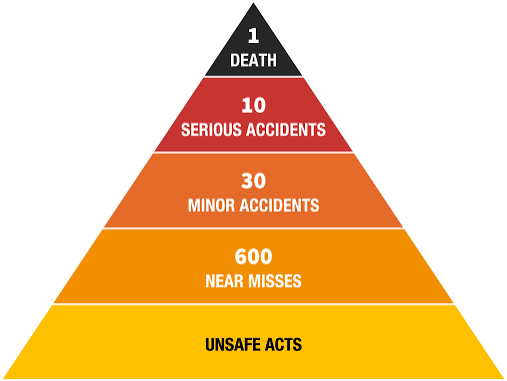
Reflecting on recoveries where weather deteriorated faster than anticipated, whether in fighter formations or airliner cockpits, I recognize how collective momentum can outpace collective caution. As formation leaders or line captains, our responsibility to verbalize diversion thresholds early shapes outcomes decisively. Tower supervisory presence; SFS in military operations or operations supervisors in civil, offers untapped perspective that too often remains silent. Aviation culture favouring “recover home” compounds this across sectors. Near-misses teach most profoundly: they expose shared biases, procedural gaps, and the universal instinct to normalize deteriorating conditions.
Institutional courage defines mastery across civil-military divides. Airlines must celebrate captains declining third approaches into saturated alternates, just as fighter squadrons honour leaders breaking patterns at 40 DME. Supervisory oversight carries explicit intervention duty; ATC radar translates universally to runway protection authority. Silence from any node erodes shared margin.
India’s regulatory framework enforces this hierarchy unequivocally: safety supersedes schedule.DGCA-mandated FOQA surveillance, TEM training, and “no-blame” go-around culture ensure alignment with safety physics for scheduled operators and military alike. Monsoons remain unconquerable forces, but containable operational challenges.
India’s diverse aero-climatic battlespace; from coastal deluge to Himalayan orographic traps, demands orchestrated competence from commercial carriers serving 300 million passengers and IAF maintaining combat readiness. As climate intensifies and air traffic quadruples by 2030, safe monsoon execution separates mature aviation ecosystems from merely capable ones. Runways must grip through 72 mm/hr downpours, Doppler paint threats 12 minutes early, and captains; civil or military, execute TEM surgically.
Aviation professionals do not conquer monsoons; they respect them. We build doctrine from near-misses that never scarred runways, converting seasonal fury into structured predictability. When infrastructure holds firm, intelligence flows clearly, and command authority stands absolute; whether Air India flight deck or Jaguar cockpit, the safety chain proves unbreakable.
Mastery is measured not by landings completed, but by capabilities preserved. Monsoon operations mark institutional excellence; where every link bears its rated load, and integration scales safety beyond isolation.
Be Safe. Fly Safe.