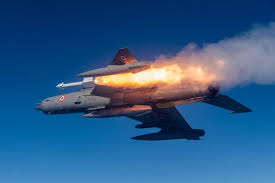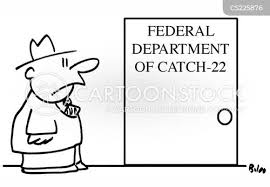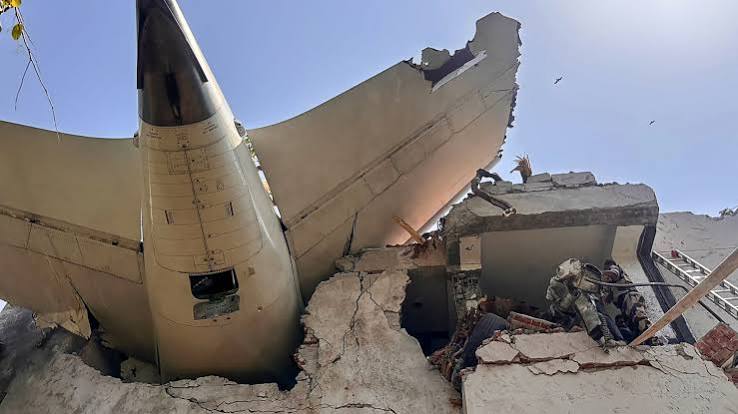
Captain Sameer Abul Dinesh Callaghan was a cocktail of religious backgrounds, bureaucratic paperwork and bandobast. His name required more cross-checking than a ten hour flight plan… his behaviour … well … Everyone just called him Sad Sack.
By every measurable airline standard, he was a model pilot. He arrived on time.. everytime, wore his uniform correctly.. with the Tie.. tight and the Cap peaked, passed his medicals and simulator checks, and knew his aircraft. His paperwork was neat. There was absolutely nothing wrong with his official file. Which, as the investigators would discover later, was precisely the problem.
Sad Sack liked no company in particular, stayed to himself, was a loner… but unfortunately “Alone was Enough”. Nobody wanted to make a fuss over a technically competent pilot. Besides, he passed every check. What more do you want from a man entrusted with the lives of hundreds of passengers?
In our fictional story, Sad Sack eventually did something that put lives at risk. Suddenly, colleagues remembered conversations, instructors recalled observations and supervisors admitted they had concerns. An inquiry followed, procedures were reviewed, and aviation returned to investigating consequences rather than causes.
One question remained: if the warning signs were visible, why had nobody acted?
KNOWLEDGE, SKILLS AND THE UNMARKED BOX
Aviation understands KSA: Knowledge, Skill and Attitude. Knowledge can be examined and skills demonstrated, but attitude is harder to assess. One instructor calls a trainee assertive; another calls him arrogant. A pilot who challenges an unsafe decision may be labelled difficult and failed, while one who agrees with everything becomes a team player and a “My Boy” … sadly, these days everyone wants to be a My Boy.
So in flying we have qualification standards that measure deviations to the nearest foot and knot, yet when a pilot is aloof, indifferent, intimidates a colleague or refuses legitimate feedback, the report may say, “Nil Comments” That is aviation’s equivalent of reporting an engine fire as a non issue. A Grey Rhino.
Writing a report is not an ego contest. Instructors must record observable behaviour, assess it consistently and escalate credible concerns. Did the trainee acknowledge an error? How did he respond when challenged? Did his conduct undermine crew coordination? The evidence must matter more than mere impressions.
THE INSTRUCTOR WITH A HOME LOAN
I don’t envy the modern day instructor. He must maintain standards without upsetting trainees, preserve morale and finish within the simulator slot. So he reaches for the safest instrument in his worn out bag: euphemism.
A deficiency becomes a development point, the development point becomes a coaching opportunity, and the coaching opportunity becomes a tick in the training record.
Simple Translation: “I would not want this gentleman as my first officer on a dark night over the ocean, but I would quite like to retain my job. Thank you.”
Instructors are not psychiatrists, and simulators are not consulting rooms. Their duty is to assess professional behaviour, document evidence and refer genuine concerns through proper channels. They must neither diagnose people nor ignore conduct that threatens safety. So if he/she reports a concern, he/she risk accusations of bias; ignores it and risks being blamed after an incident. The paperwork may be complete and the aircraft airworthy, yet the decision-making around the human being remains unserviceable.
RADICALISATION AND THE PERFECT SCAPEGOAT
After a disturbing incident, there is a temptation to find one convenient explanation: religion, ethnicity, nationality, upbringing or mental health. But religion does not make someone less or more dangerous, nationality is not a risk assessment, and mental illness is not synonymous with violence.
Reporting about the September 2026 Flydubai cockpit attack involving an Omani co-pilot accused of attacking an Indian captain has raised questions about reported concerns and previous flying restrictions. Allegations must not be mistaken for established findings. The essential questions are what was known, who knew it, whether the information was verified and whether appropriate action followed.
Most unconventional or distressed people are not violent. Equally, credible threats and substantiated safety concerns cannot be ignored simply because addressing them is uncomfortable. The objective should always be evidence based risk management, not collective blame.
THE RECORDS WE KEEP AND THE CONCERNS WE LOSE
The FAA’s Pilot Records Database, governed by 14 CFR Part 111, gives authorised employers access to specified pilot records for hiring decisions. It is not a universal register of behavioural concerns or extremist views, and it does not replace proper investigation.
A rumour is not a finding, a diagnosis is not proof and a disagreement is not misconduct. Aviation needs a fair, lawful process for sharing verified, relevant safety information while protecting confidentiality and allowing individuals to challenge unfair findings.
A Regulator must establish clear standards. Airlines must investigate credible concerns. Instructors must document evidence rather than impressions. Colleagues must recognise that raising a genuine concern is not betrayal; sometimes, it is the most professional thing they can do.
No system can predict every act of violence. But there is a fundamental difference between an unforeseeable event and a warning that was available but ignored. One may have been unavoidable but the other demands accountability.
THE FINAL CHECK
Neither Sad Sack nor the present institutional dilemma concerning this, is fictional.
A clean medical certificate, a simulator pass and a spotless training record tell us something, but not everything. Professional competence also requires judgement, accountability, communication and the ability to function safely as part of a Team.
When an incident occurs, investigators must examine not only the pilot at the controls but also the organisation that selected, trained, assessed and supervised that pilot. They must establish what could reasonably have been known beforehand and why a credible warning remained unresolved.
Aviation can detect engine fires, cabin smoke and deviations from an approach profile. Yet when someone says, “I am concerned about this person’s behaviour,” the system sometimes develops a mysterious technical fault. The reporting channel is unclear, responsibility is shared, the meeting is postponed, and the concern quietly expires. All until the day an inquiry asks who knew what… and suddenly everyone remembers. Everyone had concerns. Everyone thought someone else was dealing with them.
Sad Sack passed every check you had in the book and the system kept failing to act.
As pilots, we are trained to listen for the odd sound, the unfamiliar whine, the unexpected hiss, the slightest change in feel. We know that catastrophe rarely begins with a bang; sometimes, it begins with a warning we chose to ignore.
We do not wait for an engine to fail before investigating an abnormal indication. Nor should we wait for a human being to cause a catastrophe before acting on a credible warning. In aviation, the most dangerous failure may not be in the aircraft, but in a system that heard the warning, saw the signs, ticked every box, and did nothing.
The ultimate safety check is not whether the paperwork is complete. It is whether someone had the courage to sound the alarm, and whether someone else had the integrity to listen.
Captain Akshay
16 October 2026