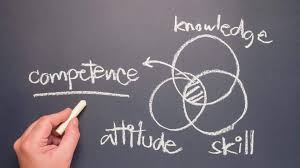
Pilot competencies are the essential skills, knowledge, and behaviors for safe and effective flying, extending beyond basic stick-and-rudder skills to include non-technical abilities like Situational Awareness, Communication, Leadership & Teamwork, Problem Solving, Workload Management, Application of Procedures, and Aircraft Management (Manual & Automation).
Category: Aviation knowledge and operations
Aviation knowledge encompasses the broad range of technical, regulatory, and operational information required to understand, operate, and manage aircraft and air systems.Key areas include the principles of flight, aerodynamics, aircraft systems, navigation, meteorology, air law, human performance, and safety management systems. This knowledge is essential for pilots, air traffic controllers, and other aviation professionals to ensure safe and efficient operations.
Pilot Competencies in Civil Aviation Training: PART 2
When industries mature, their language evolves before their structures do. Aviation was no exception. By the early twenty-first century, accident reports had shifted decisively; from hardware malfunctions and procedural lapses toward cognition, behaviour, and decision-making.
Pilot Competencies in Civil Aviation Training: PART 1
CBTA focuses on performance-driven training and assessment, ensuring that learning objectives align with real-world competencies. This approach applies across all aspects of pilot training, from aptitude testing and initial licensing to instructor/evaluator training and operator training.
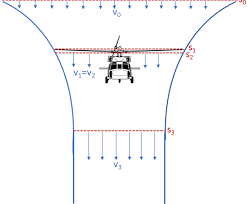
Application of Momentum Theory in Analysing the Performance of Helicopter Rotors
This article delves into the application of momentum theory to analyze helicopter rotor performance, from basic principles to practical design implications. We’ll explore how it models rotor flow, derives key parameters, and introduces the Figure of Merit as an efficiency metric. Along the way, we’ll highlight real-world applications, limitations, and future directions—all while keeping the discussion engaging and grounded in accessible
aerodynamics.
Pilots and Mental Health – India’s Untapped Safety Frontier
Investing in pilot mental health is not an act of charity; it is a strategic safety imperative. A well‑supported, psychologically resilient pilot is aviation’s most vital safety asset. India’s booming aviation industry cannot afford to treat mental wellness as a peripheral concern.
Pilot Training in India: Navigating Challenges, Seizing Opportunities, and Charting the Future
In aviation, the runway ends but the sky begins. It’s time for India to build a runway worthy of its ambitions—long, strong, and ready for take-off.
EYES WIDE OPEN: SITUATIONAL AWARENESS IN INDIAN SKIES
Situational awareness (SA) is the perception of environmental elements within a volume of time and space, the comprehension of their meaning, and the projection of their status in the near future.
Aviation Training in India
The demand for aviation training and related services is increasing and likely to grow in double digit. Asia-Pacific region has huge gap between demand and supply primarily due to insufficient training capacity in terms of infrastructure and staff shortage.
India: Building Aviation Simulator Infrastructure
Developing national flight simulator infrastructure is no longer a matter of convenience or cost-efficiency; it is a strategic national imperative. As India accelerates toward becoming a global aviation powerhouse, its ability to train, certify, and upskill thousands of pilots annually will define the safety, scalability, and sustainability of its aviation sector. Inadequate simulator access not only delays training and raises costs but also puts regulatory compliance and operational readiness at risk.
Leadership in Aviation: A Flight Crew Perspective: Part 2
“Dos and Don’ts” lists are helpful because they provide clear, concise guidelines for acceptable and unacceptable behaviours or actions in specific situations. This helps individuals understand expectations, avoid mistakes, and achieve desired outcomes by focusing on what to do and what not to do.