In India and parts of the world, most of us grow up believing that authority is to be respected, not questioned. I too was taught that elders know better, teachers know better, and the guru must be obeyed. That is part of culture, and there is much that is good about it. Respect for experience is a virtue. But in aviation, unquestioning respect can become dangerous.
One airline that comes to my mind is Korean Air. For years it suffered a high number of accidents. Investigators found that one reason was the steep authority gradient in the cockpit. Junior first officers often found it difficult to question captains, even when they believed something was wrong. The airline accepted the problem, changed its training and culture, and transformed itself into one of the safest airlines in the world. It has not suffered a fatal hull-loss accident since 2000.
The world has seen one too many accidents this year. Collisions in the air, on the ground, and confusion galore. The recent crash at Baramati in India, with a minister on board, is a sobering example.
The aircraft had no business even commencing that illegal approach. Ask any pilot in private and they would agree.
I choose these words very carefully… no business even commencing that approach. The “Approach Ban Point” is defined for a reason. Google it if you must.. but it says very clearly that if the weather at the airport is below minima.. one can’t even commence the approach procedure, let alone.. descend to the FAF or the Minima.
We do not yet know everything that happened in that cockpit. But one cannot help wondering whether a very capable first officer felt empowered enough to challenge the decision strongly enough, or whether the old belief that “the captain knows best” made speaking up more difficult. May they Rest in Peace.. but silence can’t and shouldn’t ever rest in peace. The habit of remaining silent does not begin in the cockpit. It begins much earlier. It starts in childhood and follows us into colleges, offices, hospitals, the military, and eventually into aviation.
But a cockpit is different.
A cockpit is not a classroom. It is not a place where one person teaches and the other listens. It is a workplace where two trained professionals share one responsibility and that is bringing everyone home safely. That requires constant cross-checking, questioning, and speaking up the moment something does not look right. Safety depends on teamwork, not rank.
That is why Crew Resource Management (CRM) became one of the most important advances in modern aviation. Every crew member, regardless of seniority, has both the right and the duty to raise concerns. A first officer is not there simply to handle the radios or move the controls. He or she is there to catch mistakes before they become accidents. But procedures alone cannot change deeply embedded culture.
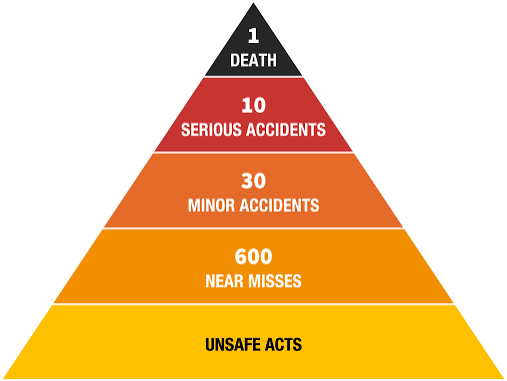
In many cockpits and training organisations, hierarchy still carries too much weight. A senior captain may hesitate to seek another opinion because it may be seen as a sign of weakness. A junior first officer may notice something is wrong, yet remain silent because interrupting the captain feels disrespectful. That silence is never harmless.
Sometimes nothing happens. Sometimes there is a close call. Sometimes people die.
History shows that many accidents were not caused by a lack of flying skill. A quick look at several VIP aviation accidents around the world reveal a familiar and dangerous pattern: pressure of time, reputation, authority and performance. The aircraft was rarely the weakest link. The breakdown was often human. Someone recognised the danger but did not.. or could not.. speak with forcefulness. Good CRM is not about being polite. It is about ensuring that the right words are spoken at the right time.
In the corporate world, that may mean refusing to operate a flight in marginal weather and having the courage to tell the boss, the management, the minister, or the billionaire waiting in the cabin:
“Sorry Sir.. not today.. Not on my watch.”
Whether it is a Head of State like Trump or Modi, a business tycoon like Ambani, Adani, or Musk, a minister like Pawar or a General like Gen Rawat, or anyone else,
Professionalism means having the courage to stand by your judgment when safety is at stake. That is what having a straight spine looks like. That is what a true professional does.
Here I need to stress that this responsibility does not rest with the junior pilot alone. It rests even more with instructors, training captains, examiners and senior commanders. Culture always flows from the top.
If a student is made to feel foolish for asking a question, eventually the questions stop. If a first officer is brushed aside for raising a concern, the next concern may never be voiced. The most experienced pilots must create an atmosphere where questions are welcomed, differing opinions are respected, and disagreement in the interest of safety is never mistaken for disrespect. The best captains do not wait to be challenged. They ask,
“What do you think?”
Those four words can transform the atmosphere in a cockpit. This culture must begin in flight school and continue throughout a pilot’s career. Students should learn that questioning a decision is not insubordination. A Simulator session should always reward communication as much as aircraft handling. Airlines should evaluate captains not only by how well they fly, but by whether they create a cockpit where others feel safe to speak. The best captains are not those who always have the answers. They are the ones who make it easy for others to offer theirs.
A true ‘GURU’ is never afraid of questions. A true teacher welcomes them because the goal is not to protect authority ever.. It’s to help the student learn and like I said sometime earlier, a student will learn in spite of the instructor.
India has some of the finest pilots in the world. Their technical ability is beyond question. The next leap in aviation safety will not come from better aircraft or more sophisticated technology. It will come from building a culture where no one is afraid to speak. The staff and retinue of ministers and generals will push you… have the courage to say ” No”
While aircraft are designed with multiple layers of redundancy… Humans aren’t made that way. That’s why we have a multi crew cockpit. Our cockpit culture should be built the same way. Because in aviation, SILENCE is not RESPECT.
Sometimes, it is the last barrier between a mistake and a tragedy.
Capt Akshay
10/07/2026