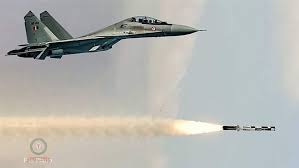
There was a time when the phrase “Your tail clear” meant something noble. In fighter aviation, it meant your wingman was watching your blind spot while both of you travelled through the sky at unhealthy speeds trying not to become smoking wreckage. One pilot looked after another because he genuinely intended to bring him home alive.
No audit. No committee. No “kindly acknowledge receipt.” Just trust.
Today, in civil aviation, “tail clear” has evolved magnificently. It now roughly translates to:
“Please ensure sufficient documentation exists such that when this eventually collapses, my name appears nowhere near it.” Somewhere along the way aviation stopped merely flying aircraft and began mass-producing paperwork. Entire forests now sacrifice themselves annually so that somebody in Quality can stamp “Reviewed” on Page 47 of a procedure nobody has actually followed since 2011.
I realised this cultural shift during a simulator session years ago. The instructor, a legendary aviator with twelve thousand hours and the emotional warmth of a radar warning receiver, demonstrated a beautifully smooth technique completely different from the SOP.
Naturally I asked, “Sir, why don’t we do it the way the manual says?” He looked left. Looked right. Lowered his voice like the DGCA was hiding in the circuit breaker panel. Then he whispered, “Because this works better.
But don’t ever say I taught you this.” That sentence deserves to be written on the entrance wall of every training department. Preferably in disappearing ink.
The modern instructor is a fascinating species. In flight he says, “Use common sense… Nobody actually flies it exactly like the book… Don’t overcomplicate things.”
Outside the cockpit, however, he transforms instantly into ICAO’s legal department. “As per SOP paragraph 4.2 subsection B…” And finally the immortal line: “You didn’t hear this from me.” Which in aviation is legally equivalent to entering the witness protection program.
Years later, some poor junior gets questioned after repeating the same technique. “Why did you do it that way?” “Sir… one of the trainers taught us…”
Silence….:Room temperature drops instantly. “Which trainer?”
Now the trainee faces aviation’s first real command decision. He remembers perfectly well who taught him. He remembers the date, the smirk, the accent, the setting the simulator bay, the weather outside, and probably what the instructor had for lunch.
But survival instincts activate.
“I… don’t remember, sir.”
And just like that, another trainer’s tail remains gloriously clear. There is also the instructor who never says anything wrong but never says anything useful either. Every organisation has one. He quotes manuals with the intensity of a Supreme Court lawyer but somehow answers operational questions without providing operational answers. Usually he is someone who has spent a short time with the Civil Aviation Authority of the country.
“Sir, why exactly do we do this?” “
As per SOP.”
“Yes sir, but why?”
“It is company policy.”
“Yes sir, but practically…”
“At this stage focus on compliance.”
The trainee leaves with three references, four doubts, and mild depression.
Then there are rules. Every new manager arrives with two bags. One containing past baggage and ambition. The other containing fresh rule and procedures.
Nobody removes rules in aviation. They merely add new ones on top of old ones like sedimentary rock..
Most begin with the terrifying phrase: “With immediate effect…”
These four words have caused more suffering than turbulence.
Some procedures today exist because in 1999 somebody somewhere made a mistake involving a clipboard and a fuel slip. The incident vanished long ago. The procedure survived. Like a ghost haunting the crew room.
I once saw a register so old even the paper looked tired. Nobody knew why it existed. Nobody knew who checked it. But every shift filled it religiously because once, sometime during the Mughal Empire, an auditor had apparently asked for it.
That is modern aviation.
The actual task is optional. The paperwork is sacred.
A technician can spend six hours filling forms proving the job was done while the actual defect sits nearby quietly evolving into a bigger defect.
It reminds me of the old saying: “Rules are the obedience of fools and the guidance of wise men.”
Unfortunately aviation has misunderstood both halves.
The fool follows rules blindly without understanding why they exist. He/she believes safety lies in literal obedience even when common sense is screaming for attention.
The wise man understands the intent behind the rule. He respects procedures deeply, but also understands context, judgement, and operational reality. Rules guide him because wisdom interprets principles better than bureaucracy ever can.
Sadly, modern aviation increasingly trains neither wisdom nor judgement.
We train defensibility.
The objective is no longer merely to operate safely. It is to remain legally and administratively survivable after operating unsafely.
And so the culture slowly changes.
The senior says the correct things publicly, The junior says nothing privately, The manuals grow thicker, The understanding grows thinner.The audits become cleaner,The operations become dirtier…. And yet aviation survives.
Mostly because ordinary people quietly help each other despite the bureaucracy.
The Captain who says, “I’ll take responsibility.”
The Engineer who stays back because he doesn’t trust the defect nor the rectification process.
The Instructor who actually explains instead of quoting manuals like scripture.
Those people still understand the original meaning of “Your tail clear.”
It never meant: “Protect yourself.” It meant: “I’ve got your back.”
Perhaps the real emergency in aviation today is not technical failure, unstable approaches, or even human error.
It is that somewhere between compliance forms, audit observations, refresher modules, and seventeen signatures in only black ink, (#iykyk ..remember the AEP form) we quietly replaced courage with caution, mentorship with ambiguity, and accountability with carefully worded emails.
Surprisingly, the aircraft still flies beautifully. It is our spine that has slowly become unserviceable.
Capt Akshay
25/05/2026