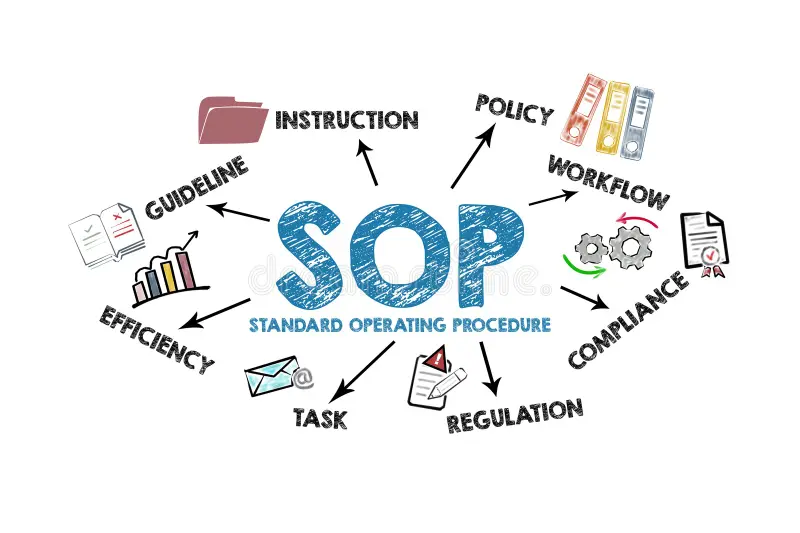
Aviation loves to speak about standardization, discipline, and SOP culture. Yet beneath the polished manuals and carefully scripted simulator briefings lies an uncomfortable truth: many pilots are trained to operate aircraft without ever truly understanding the physics behind what they are doing. Procedures are memorized, flows are perfected, and checklist discipline is worshipped, but the “why” behind aircraft behavior is often missing entirely.
The result is a generation of pilots who can operate sophisticated automation with mechanical precision while remaining strangely disconnected from the aerodynamic and atmospheric logic driving the machine beneath them.
Pilots routinely enter temperature deviations and QNH corrections into the FMC without truly understanding what those numbers are doing to the aircraft’s vertical path. A hotter-than-standard atmosphere changes the spacing between pressure levels, alters true altitude, affects descent geometry, and modifies how the aircraft interprets vertical navigation predictions. A colder atmosphere compresses those levels and changes terrain clearance margins. Yet for many crews, entering ISA deviation has become a clerical ritual rather than an operationally understood action.
The irony is painful. Modern airliners are flying laboratories of atmospheric physics, but too many cockpits have reduced that physics into button pushing.
The same intellectual laziness appears everywhere. Ask why the standby altimeter on a Boeing 737 often reads approximately 140 to 150 feet low in cruise and the standard answer usually arrives immediately: “It’s just a standby instrument.”….Really? That explanation insults both the aircraft and the pilot.
Very few instructors explain the actual aerodynamic reason. The standby static ports are positioned differently on the forward fuselage, in a region affected by disturbed airflow around the nose section. As the aircraft moves through the air, the fuselage creates localized pressure disturbances and airflow separation effects. Much like the wake and pressure furrow created by a ship moving through water, the aircraft generates complex airflow eddies around the fuselage. Those disturbances slightly alter the local static pressure sensed by the standby ports.
The result is a locally higher sensed static pressure than true undisturbed atmospheric static pressure. Since altimeters interpret higher static pressure as lower altitude, the standby instrument consistently indicates lower than the actual cruise altitude. That small 140-foot error is not random. It is a predictable aerodynamic consequence of probe placement and local airflow behavior. Yet most pilots fly entire careers without hearing that explanation once. Instead, aviation culture normalizes shallow answers. “That’s just how it is.” “The airplane does that.” “Don’t overthink it.”
But aviation was never built by people who stopped thinking. The same shallow teaching exists in countless other areas. Many pilots know swept wings delay critical Mach effects but cannot explain spanwise flow or why swept-wing aircraft are more vulnerable to tip stall tendencies. Pilots recite coffin corner definitions without understanding the convergence of low-speed buffet margins and high-speed Mach buffet boundaries at altitude. Shockwave formation, boundary layer separation, Mach tuck, and drag divergence are discussed like abstract academic concepts rather than real aerodynamic phenomena affecting the aircraft every single day.
Even basic descent planning often exposes weak understanding. Pilots know a hotter day creates a “higher” approach path in VNAV calculations, but many cannot explain why. The aircraft is navigating pressure altitude while existing in true atmospheric conditions where warmer air expands pressure levels vertically. The indicated altitude may remain unchanged while true altitude shifts significantly. This directly affects obstacle clearance, descent geometry, and approach stability. Yet many crews simply memorize cold temperature correction procedures without ever understanding the atmospheric mechanics behind them.
Modern aviation has unintentionally created procedural experts and conceptual amateurs. Automation has made the problem worse. Many pilots know exactly which button to press when VNAV behaves unexpectedly, but far fewer understand the mode logic architecture driving those behaviors. They know sequences but not systems. They can recite memory items but struggle to explain aerodynamic consequences. The aircraft becomes something to manage procedurally rather than something to understand physically.
And perhaps that is the greatest failure of modern flight training. Because real airmanship was never supposed to mean blind obedience to ritual. It was supposed to mean understanding the machine, the atmosphere, the energy state, and the physics deeply enough to predict behavior before it happens.
The best captains are not the ones who merely quote SOPs. They are the ones who understand why the SOP exists. They are the ones who can explain not just what the aircraft is doing, but what the air around the aircraft is doing.
Because the atmosphere is not a simulator graphic. It is a living fluid. Air compresses, separates, accelerates, disturbs, expands, and deceives. Static ports lie when airflow changes. Temperature alters vertical geometry. Pressure reshapes altitude itself. Shockwaves form invisibly over wings long before the pilot feels buffet. Every flight is a constant negotiation with invisible physics.
Yet too often the industry trains pilots to memorize outcomes instead of understanding causes. And that should worry every single person in aviation.
Because checklists cannot reason. Automation cannot truly understand. SOPs cannot adapt. Eventually, when something unexpected happens, the only thing left in the cockpit is the pilot’s depth of understanding.
And that depth is becoming dangerously shallow.
Capt Akshay
15 May 2026