Aviation accidents involving Very Important Persons (VIPs) occupy a peculiar place in public memory. They are often remembered for who was on board rather than why the aircraft was lost. Media narratives gravitate toward conspiracy, equipment failure, or individual error, while the more uncomfortable truth; the convergence of human pressure, weather, terrain, infrastructure, and institutional culture, frequently remains unexplored.
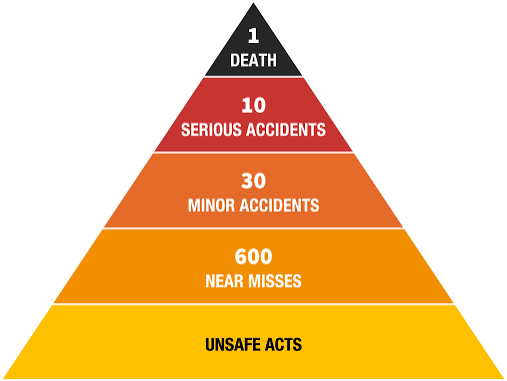
Yet, when examined dispassionately, VIP air crashes across countries and decades reveal a striking consistency. These accidents are rarely caused by a single catastrophic failure. Instead, they emerge from layered vulnerabilities, quietly aligning until the margin for recovery disappears.
The Invisible Weight of a “Special Flight”
A VIP flight is rarely labelled as such in operational documents, but everyone involved knows it is different.
Schedules are tighter. Delays draw attention. Diversions require explanation. Decisions that would be routine in commercial aviation; holding, returning, or diverting, acquire symbolic, political, or reputational consequences. Importantly, the pressure is seldom explicit. No one tells a crew to “press on.” Instead, expectations are communicated through tone, habit, and organisational memory.
Over time, this creates a dangerous cognitive shift. Decision-making subtly moves from “Is this safe?” to “Can we make this work?”
Weather: The Universal Enabler
Weather features prominently in VIP crashes; not because VIP crews are less capable, but because weather magnifies every other weakness.
Low visibility, marginal ceilings, convective activity, or rapidly changing conditions increase workload and compress decision time. When layered over schedule pressure and expectation bias, weather becomes the final catalyst.
The 1999 crash involving John F. Kennedy Jr. remains illustrative. Flying at night over water in hazy conditions without an instrument rating, he likely succumbed to spatial disorientation. The aircraft was serviceable. The weather was technically legal. The environment, however, offered no forgiveness.
Weather, by itself, does not cause accidents. It enables flawed decisions to become fatal.
Terrain: Where Margins Vanish Completely
VIP movements frequently involve remote or constrained destinations; military airfields, hilly regions, temporary helipads, or airstrips with limited infrastructure. Terrain eliminates the buffer that weather sometimes still allows.
The 2010 crash of a Polish Air Force Tu-154 near Smolensk exemplifies this risk stack. Descending below minima in fog toward a poorly equipped airfield, surrounded by trees and uneven terrain, the crew faced symbolic pressure tied to national remembrance and senior leadership presence.
This was not recklessness; it was authority-gradient compression. The aircraft struck terrain because the system around the cockpit had quietly narrowed the range of acceptable decisions.
Navigation and Infrastructure: Silent Contributors
Many VIP accidents do not occur at major international airports but at locations with:
- Non-precision approaches
- Limited or unreliable weather reporting
- Sparse radar coverage
- Infrequent operational use
The 1996 crash carrying Ron Brown during a non-precision approach near Dubrovnik highlighted how outdated charts, degraded situational awareness, and expectation bias can culminate in controlled flight into terrain.
Infrastructure gaps rarely dominate headlines, yet they shape risk long before the final descent.
Time Pressure: The Hazard That Never Declares Itself
Time pressure in VIP operations is institutional rather than personal. Ceremonial schedules, security windows, political commitments, disaster response optics; all create an environment where arrival matters.
The danger lies in the subtlety. Crews may internalise pressure, equating delay with failure. Organisations may unintentionally reward “mission completion” rather than conservative judgement. Over time, this normalises risk acceptance.
Fatigue, marginal weather, and time pressure form a triad that aviation history shows to be predictable, not accidental.
The Indian Context: Familiar Patterns, Familiar Consequences
India’s aviation environment magnifies these dynamics. Diverse terrain, rapidly changing weather, uneven infrastructure maturity, and deeply hierarchical institutional culture; particularly in state and military aviation, create fertile ground for VIP-related risk convergence.
VIP Operations in Disaster and Terrain: Uttarakhand, 2013
The 2013 Pawan Hans Dauphin helicopter crash in the Kedarnath region occurred amid catastrophic floods and intense pressure to move officials during rescue and relief operations. Flying in extreme Himalayan terrain, with rising cloud and valley winds, the crew continued into worsening weather.
The investigation pointed not to mechanical failure, but to continued flight into deteriorating conditions in confined terrain, leading to loss of situational awareness and CFIT.
This accident underscores a uniquely dangerous Indian risk combination: VIP movement merged with disaster response. Urgency and symbolism overwhelm conservatism, making a turn-back feel like abandonment rather than professionalism.
Military VIP Movement in Marginal Weather: Coonoor, 2021
The Mi-17 V5 crash near Coonoor, carrying CDS Bipin Rawat and senior military leadership, brought national attention to VIP aviation risk in India.
Operating in hilly terrain with rapidly changing weather, the helicopter encountered conditions conducive to spatial disorientation. The aircraft was serviceable. The crew was experienced. Yet the margin was narrow.
The uncomfortable question raised was not about competence, but whether such flights should proceed at all in marginal conditions. High office does not justify narrow margins; it demands wider ones.
Operational Importance Without Precision: Arunachal Pradesh, 2019
The Indian Air Force An-32 crash over Arunachal Pradesh, though not carrying political VIPs, illustrates another recurring Indian vulnerability: high-importance flights over inhospitable terrain with limited navigational infrastructure.
Sparse radar coverage, unpredictable weather, and challenging topography delayed location of wreckage and complicated rescue. The parallels to VIP operations are clear; time sensitivity, operational pressure, and reliance on experience to compensate for systemic gaps.
State Helicopter Operations: Normalisation of Risk
India has seen multiple accidents involving state helicopters ferrying ministers or senior officials, often during election periods or regional tours. Common factors include:
- Marginal weather
- Tight itineraries
- High-workload operations
- Informal helipads and obstacle-rich environments
These short, repetitive flights often normalise deviance; until the system runs out of margin.
Crew Psychology: Professionalism Under Strain
VIP crews are typically chosen for competence and reliability. Ironically, these very traits can increase vulnerability.
High professionalism may produce reluctance to disappoint, overconfidence in managing marginal situations, or suppression of internal doubt. In hierarchical cultures, challenge; both within the cockpit and upward, may be muted.
When symbolism enters the cockpit, role clarity erodes. Is the crew serving a mission, or safeguarding a flight? Aviation safety demands the latter, but culture does not always comply.
Patterns That Refuse to Change
Across global and Indian cases, the sequence is disturbingly consistent:
- Marginal weather
- Non-standard destination
- Symbolic or schedule pressure
- Erosion of diversion discipline
- Late decision-making
- Terrain or disorientation
- No recovery margin
The aircraft is almost never the weakest link.
What Must Change: Lessons That Still Matter
1. VIP Status Is an Operational Hazard
VIP presence must be formally recognised as a risk factor, requiring stricter minima, enhanced planning, and experienced crew pairing.
2. Absolute Authority of the Cockpit
Diversion or cancellation for safety must be institutionally protected and culturally reinforced; without post-flight justification rituals.
3. Infrastructure Reality Checks
If precision approaches or reliable weather data are absent, operational minima must be raised; not interpreted.
4. Training Beyond Technique
VIP crews need explicit training in expectation bias, authority gradients, and decision-making under symbolic pressure.
5. Time Must Be Treated as a Risk Variable
Any operation that cannot tolerate delay is, by definition, unsafe.
Closing Reflection
VIP air crashes are not failures of technology. They are failures of systems that quietly shift pressure downward while responsibility flows upward.
Commercial aviation has learned; often painfully, that checklists alone do not prevent accidents; awareness does. The same lesson applies here. Until organisations acknowledge that prestige, urgency, and symbolism are operational hazards, history will continue to repeat itself.
In aviation, gravity is impartial. It does not recognise rank, reputation, or reason.
It responds only to decisions.
And decisions, ultimately, reflect the systems that shape them.
Be Safe. Fly Safe.