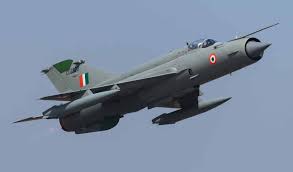
My introduction to the legendary MiG-21 began the moment I arrived as a trainee at the MiG Operational Flying Training Unit (MOFTU) in Tezpur. Fresh from the Air Force Academy, I found myself on the cusp of a journey that would come to define my career and character. The very first time I laid eyes on the iconic jet, its angular silhouette glinting in the early morning light, I was transfixed; not just by its looks, but by the aura of history and challenge it carried.
The MOFTU days were both daunting and exhilarating. The MiG-21’s reputation for demanding absolute precision was not exaggerated. As a young pilot-in-training, I quickly learned that the MiG-21 offered no room for complacency, no margin for error. It was an unforgiving mentor, teaching lessons in discipline, respect, and resilience. Mistakes were neither overlooked nor forgotten, but every successful sortie felt like a badge of honour earned through grit.
From Tezpur, my next posting was Bagdogra, where the second phase of MiG-21 training awaited. Here, the aircraft that had once seemed intimidating began to feel like an extension of myself. The routine was rigorous, the missions relentless, but each flight further honed my skills and resolve. To master the MiG-21 was to master oneself.
My first operational squadron posting took me to Sirsa; a place where apprenticeship ended and true air-warrior life began. The MiG-21 was, by now, both teacher and comrade. The challenges multiplied, as did the rewards. Every mission demanded not just technical proficiency, but also composure under pressure and the courage to act decisively in the unforgiving environment of aerial combat.
Years later, destiny would bring me to Bhuj, for what would become my second chapter with the MiG-21. This time, the cockpit carried a new responsibility: instructing the next generation of fighter pilots. With Bhuj’s squadron in a training role, my own journey came full circle as I guided young aviators through the same crucible that had once shaped me. Passing on hard-earned wisdom, I came to appreciate the MiG-21’s role not just as a weapon of war, but as a forger of character.
Through countless missions; training and operational, the MiG-21’s personality remained constant. Compact, powerful, and unpredictable, it demanded everything a pilot could give, physically and mentally. In an era now defined by digital dashboards and error-tolerant automation, the MiG-21 was unapologetically analog: a pure, visceral flying experience where mistakes were final and mastery was proof of mettle.
The MiG-21’s story, of course, is inseparable from the history of Indian air combat. From its arrival in the 1960s and its exploits during the 1971 Indo-Pakistani War and the Bangladesh Liberation War; to its role in later conflicts as both shield and sword, the aircraft earned its fearsome reputation in the crucible of battle.
Yet, far from being eclipsed by time, successive upgrades like the Type-96,Type 75 and Bison and its associated type trainers like T-69, T-66 etc, MiG-21’s spear sharp, blending Cold War design with contemporary avionics and weaponry. It was never just about the machine; it was about the bond between pilot and aircraft, the mutual respect built through hard landings, narrow escapes, and hard-fought victories.
To many, the MiG-21 is defined by statistics, accident rates, or obsolete technology. But those of us privileged to fly her knew a different truth: the MiG-21 was brutally honest, demanding mastery of both sky and self. Every flight was a handshake with fate; every landing, a mark of earned trust.
As newer, safer, and smarter fighters fill the sky, there is nostalgia; never for the risks, but for the intimacy of the experience: a lone aviator, a wailing engine, a dance with the sky on the bleeding edge of speed and skill.
Now, as the MiG-21 taxis to a well-earned retirement, it leaves a legacy measured not just in sorties flown, but in lives forged, characters built, and legends born. For me, the MiG-21 is more than metal and memories; it is spirit and soul. The machine may rest, but its mark on those who flew it will never fade.
Farewell, old friend. You were never just another jet. You were the crucible in which warriors were made, and in your cockpit, I found not just my calling, but myself.

Be Safe. Fly Safe.