Introduction
India’s civil aviation sector is at an inflection point. With domestic air traffic surpassing 150 million passengers in FY2024 and international routes expanding rapidly, the nation is set to become the third-largest aviation market by 2030. Mega aircraft deals—such as Air India’s 470-aircraft order in 2023—and the emergence of regional carriers under the UDAN scheme highlight the sector’s bullish trajectory.
However, amid this surge lies a foundational weakness: a severe shortfall in qualified pilots and a chronic underdevelopment of indigenous flight simulation infrastructure. As fleet complexity grows and airspace densifies, self-reliant, high-throughput training systems are no longer a supporting component—they are strategic enablers of sustainable aviation growth.
The Pilot Demand Surge: Simulator A Looming Bottleneck
According to long-term projections by leading aircraft manufacturers such as Boeing and Airbus, India will require over 10,000 new pilots annually over the next two decades to keep pace with its expanding aviation sector. This surge in demand is driven by a rapidly growing fleet, higher aircraft utilization rates, and the continuous addition of new domestic and international routes. Despite this pressing need, India currently issues only about 1,500 Commercial Pilot Licenses (CPLs) each year. Of those, just a fraction receives complete simulator training within the country, as domestic capacity supports barely 25% of the total requirement. Consequently, a majority of aspiring pilots are compelled to travel abroad—primarily to Dubai, Singapore, and Europe—for critical type-rating and recurrent training. This heavy reliance on foreign facilities imposes significant financial, operational, and logistical burdens on both pilots and airlines, underscoring the urgent need for expanding indigenous simulator infrastructure.
The Simulator Shortfall: A Strategic Weakness
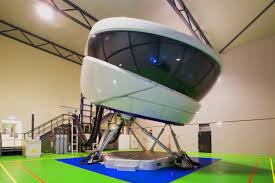
As of mid-2025, India has approximately 38 operational full-flight simulators (FFS) across various locations, covering popular aircraft types such as the Airbus A320, Boeing 737, ATR 72, and Bombardier Dash 8. While this marks a modest improvement from previous years, it remains woefully inadequate for a country poised to become the third-largest aviation market globally. With over 700 commercial aircraft currently in service and hundreds more on order, industry experts now estimate a shortfall of at least 10 to 12 simulators to meet current demand—an imbalance that will only worsen as fleets expand and diversify into new-generation aircraft.
This infrastructure gap triggers a cascading set of operational challenges:
- Delays in type-rating and command upgrades, slowing down the deployment of new crew
- Loss of productive flying hours, affecting airline schedules and crew availability
- Compliance risks with DGCA-mandated and ICAO-aligned safety regulations
- Significant financial outflows, as airlines send pilots overseas for training
Compounding the issue, DGCA regulations require recurrent simulator training every six monthsto ensure proficiency in handling critical scenarios such as engine failures, low-visibility approaches, rejected take-offs and CRM (Crew Resource Management) exercises. With limited simulator availability, airlines face scheduling bottlenecks, often jeopardizing the timely renewal of pilot certifications and compromising operational resilience. Addressing this simulator shortfall is not just a matter of convenience; it is essential for sustaining both safety standards and the growth trajectory of Indian aviation.
The High Cost of Overseas Training
Training abroad is not just a financial drain—it’s a strategic vulnerability. Here’s a typical cost breakdown for training a single pilot abroad:
- Simulator Fees: ~$13,200 for an 11-day session
- Allowances: ~$4,500 for pilot and instructor
- Accommodation: ~$3,600
- Miscellaneous (Visa/Admin): ~$180
- Total per pilot: ~$21,480 or ₹18.5 lakh
For an airline training 300 pilots annually, that’s ₹55 crore in foreign exchange. Add indirect costs—like lost flying days (~₹3.2 lakh/pilot)—and the burden multiplies exponentially across the sector.
Simulation: Beyond Technicality: A Pedagogical Revolution
Modern pilot training is not merely about clocking flight hours. It’s about developing cognitive readiness, situational awareness, and crisis response under pressure. This is where simulation-based learning steps in—not as a substitute, but a vital supplement to in-air experience.
Rooted in experiential learning theory, simulation training immerses adult learners in high-pressure, emotionally resonant scenarios. The technique is widely used in aviation, spaceflight, and even medicine (notably anaesthesiology), where real-time error is costly or fatal. It allows for:
- Safe rehearsal of emergency procedures
- Repetition for mastery of critical responses
- CRM and communication skill development
- Orientation for new trainees, reducing anxiety and dropout rates
Institutes like Jawaharlal Institute of Postgraduate Medical Education & Research (JIPMER) in the medical field have shown that structured simulation modules significantly enhance skill retention, judgment, and confidence in high-stakes domains. Aviation training in India must follow suit.
Challenges to Adoption in India
India’s resistance to simulation isn’t technological—it’s cultural. Traditional education emphasizes rote learning, often at odds with immersive, role-play-heavy methodologies. Many trainees struggle to “accept” simulators as real enough to take seriously.
Other barriers include:
- Lack of trained simulation faculty
- Insufficient debriefing expertise
- High capital costs for full-motion devices
- Limited awareness of simulation’s long-term ROI
However, as public and regulatory focus sharpens on safety, and as airlines increasingly demand performance-ready pilots, these barriers will fall. India’s frugal innovation mindset also positions it to develop cost-effective, modular simulators tailored to regional needs.
Debriefing: The Crucial Bridge Between Practice and Insight
Simulation is incomplete without structured debriefing; the process of reviewing what was done, why it was done, and how to improve. Borrowed from military protocols, debriefing reinforces learning, encourages self-reflection, and fosters emotional resilience.
In aviation, it sharpens:
- Self-assessment
- Team dynamics
- Error recognition
- Adaptive decision-making
Every simulator session must incorporate this phase to achieve training outcomes effectively.
Strategic Imperatives of Developing Simulator Infrastructure
Developing a robust, indigenous flight simulator ecosystem is not just an operational convenience—it is a strategic imperative for India’s civil aviation sector. The advantages span financial, regulatory, technological, and geopolitical domains, and the absence of such infrastructure has already resulted in significant opportunity costs. Drawing from real-world examples, here’s why this investment is essential:
1. Massive Cost Savings and Foreign Exchange Retention. Currently, Indian airlines spend an estimated ₹40–₹60 crore annually per airline on overseas simulator training, covering type-ratings, recurrent checks, and instructor assessments. For instance, in 2023, a leading low-cost carrier reportedly sent over 1,200 pilots to Dubai and Kuala Lumpur for type-rating due to unavailability of domestic simulator slots. The cumulative forex outflow for the industry exceeds ₹500 crore annually. With in-country simulators, these costs can be dramatically reduced while also protecting the rupee from avoidable depreciation pressures.
2. Operational Readiness and Flexibility. Simulator unavailability has repeatedly disrupted operations. In early 2024, multiple airlines experienced last-minute flight cancellations due to delayed simulator checks for first officers awaiting upgrades. One case involved a fleet expansion where the airline’s induction of new aircraft was held up because the type-rating of designated crew was delayed due to backlogs at foreign training centres. Indigenous simulators allow real-time access to training, especially during emergency fleet redeployments, schedule changes, or sudden pilot shortages.
3. Safety Assurance and Regulatory Compliance. The DGCA mandates recurrent simulator training every six months, covering engine-out procedures, low-visibility operations, go-arounds, CRM drills, and more. In 2022, the DGCA issued show-cause notices to several operators for lapses in simulator scheduling and delays in recurrent training compliance. Inadequate simulator access creates unnecessary risk. Increasing domestic capacity ensures strict adherence to safety timelines and avoids regulatory penalties or service suspensions that result from non-compliance.
4. Employment Generation and Skill Development. The simulator ecosystem involves a wide value chain—from hardware engineers and software developers to instructors, maintenance personnel, and training management staff. For example, the CAE Simulation Training Centre in Greater Noida, a joint venture between CAE (Canada) and InterGlobe, employs over 200 professionals and has become a model for blending global technology with local expertise. Replicating this model across regions could generate thousands of high-skill jobs, reduce migration of Indian aviation talent, and align with the Skill India and Make in India missions.
5. Revenue Potential and Regional Leadership. India’s geographic and linguistic advantage positions it as a natural training hub for emerging aviation markets. In recent years, trainees from Sri Lanka, Nepal, Bangladesh, and several African nations have travelled to India for DGCA-aligned aviation training. With expanded simulator infrastructure, India can formally position itself as a South Asian training destination, capturing market share currently dominated by Singapore, Malaysia, and the UAE. Additionally, partnerships with OEMs and simulator manufacturers could enable India to design, export, and license indigenous simulation solutions tailored for developing nations.
In summary, building indigenous simulator capacity is not just a corrective measure; it’s a forward-looking national strategy. It secures India’s aviation ambitions, reduces external dependence, supports regulatory robustness, and unlocks long-term economic dividends by transforming India from a training consumer into a global training provider.
Scaling Simulator Sovereignty: India’s Next Leap in Aviation
The global aviation training landscape offers clear precedents for India to emulate and surpass. Countries like the United Arab Emirates and Singapore have built world-class aviation training ecosystems that not only cater to their domestic needs but also serve as hubs for international airlines and trainee pilots across Asia, Africa, and Europe. The UAE’s Emirates Flight Training Academy and Singapore’s ST Aerospace Academy are now global benchmarks, drawing thousands of trainees annually and generating significant service export revenues. These successes stem from a combination of strategic government backing, robust infrastructure, and sustained collaboration between regulators, operators, and academia.
India, with its unmatched demographic dividend, geographic centrality, and rapidly growing aviation market, is uniquely positioned to replicate; and potentially exceed, these models. The country already produces a high volume of engineering and aviation graduates, and with over 700 commercial aircraft in service and more than 1,000 on order, the scale of pilot demand is unparalleled. Yet, the absence of a coordinated national strategy for aviation training continues to undermine this potential.
Government initiatives like UDAN (Ude Desh ka Aam Nagrik) are expanding regional connectivity, enabling the emergence of new entrants such as Fly91 and Air Kerala. These regional carriers operate with lean cost structures and rely heavily on operational efficiency and localized support systems. For such airlines, access to affordable, in-country simulator training is not a luxury; it is essential for survival. The prohibitive cost and logistics of sending crew abroad for type-rating or recurrent training often erode the economic viability of these startups.
Encouragingly, larger legacy and low-cost carriers have started to invest in domestic training infrastructure. Notably, major operators have announced or commissioned new simulator centres in cities like Gurugram, Hyderabad, and Bengaluru, signalling a shift towards greater self-reliance. However, these efforts remain fragmented and insufficient in scale.
What India needs now is a coordinated national push; uniting private enterprise, public institutions, and the academic ecosystem; to establish a comprehensive indigenous aviation training network. This includes full-flight simulators, fixed-based trainers, type-rating schools, and integrated ATPL programs. Central and state governments can play a catalytic role by offering incentives, land, and policy support, while aviation regulators can streamline certification processes to attract faster investment.
If implemented with vision and urgency, such a strategy could not only meet domestic pilot training needs but position India as a regional aviation training powerhouse, capable of exporting training services, hosting foreign students, and reinforcing its leadership in the global aviation value chain.
The Way Forward: A National Strategy for Simulation-Driven Aviation Growth
To fully unlock the potential of India’s aviation sector and address the acute training shortfall, a cohesive, forward-looking strategy is imperative. This involves aligning government policy, private enterprise, and academic institutions to build a sustainable, future-ready aviation training ecosystem. The following five-pronged approach can serve as a blueprint for national action:
- Promote Public–Private Partnerships (PPPs) to Develop Simulator Infrastructure. India’s aviation training needs cannot be met by government or private players alone. A PPP model—similar to those used in airport development—can be leveraged to build state-of-the-art simulator training centres across key aviation hubs. Strategic collaborations between airline operators, simulator manufacturers, aviation academies, and state governments can pool resources, reduce costs, and ensure long-term viability. The success of joint ventures like CAE–InterGlobe in Greater Noida demonstrates how PPPs can deliver world-class training solutions domestically.
- Introduce Tax Incentives and R&D Subsidies for Simulator Development. The import of full-flight simulators and their components remains prohibitively expensive due to high duties and logistics costs. By offering custom duty waivers, tax credits, and GST exemptions, the government can lower entry barriers for simulator operators. Simultaneously, funding support for indigenous R&D; such as simulation software, motion systems, and avionics modules, can help India reduce its dependence on foreign OEMs over time. A Make-in-India approach to simulator hardware and software would not only save costs but create export-ready intellectual property.
- Modernize Pilot Training Curricula with Emerging Technologies and Competencies. As aircraft become increasingly digital and automated, training programs must evolve to keep pace. Curricula should include AI-assisted systems, glass cockpit operations, cyber-security awareness, and next-generation avionics. Moreover, non-technical skills like Crew Resource Management (CRM), threat and error management (TEM), decision-making, and communicationmust be integrated as core components. Aligning simulator scenarios with real-world case studies; such as unstable approaches or adverse weather incidents, will ensure better preparedness and resilience among pilots.
- Strengthen DGCA Capacity for Faster Approvals and Regulatory Modernization. The DGCA must be empowered; both in manpower and digital capabilities, to accelerate the certification and monitoring of simulator facilities. Dedicated fast-track mechanisms for training centre approvals, type-rating program vetting, and simulator device certifications are needed. Additionally, aligning Indian regulatory standards more closely with ICAO and EASA norms would make Indian training programs more internationally recognizable, facilitating foreign pilot training and boosting India’s export potential.
- Establish an Aviation Training Research Framework. There is a pressing need to generate India-specific data on simulator efficacy, human factors, skill acquisition rates, and safety outcomes. Academic institutions, aviation medicine bodies, and regulatory think tanks should collaborate to create a formal research framework to study the impact of simulation-based learning. This can guide evidence-based reforms in curriculum design, simulator configuration, and policy decisions. Publishing this data will also help benchmark India’s progress against global best practices.
India is at a defining moment in its civil aviation journey. While the fleet size and air traffic surge ahead, pilot training and simulator capacity must keep pace. A strategic, long-term vision that combines infrastructure development, regulatory reform, academic engagement, and indigenous innovation will not only address the immediate pilot shortage but position India as a global leader in aviation training and simulation.
Conclusion: A Strategic Imperative, not a Luxury
Developing national flight simulator infrastructure is no longer a matter of convenience or cost-efficiency; it is a strategic national imperative. As India accelerates toward becoming a global aviation powerhouse, its ability to train, certify, and upskill thousands of pilots annually will define the safety, scalability, and sustainability of its aviation sector. Inadequate simulator access not only delays training and raises costs but also puts regulatory compliance and operational readiness at risk.
A national ecosystem brings multidimensional benefits. It strengthens national aviation self-reliance, reduces foreign exchange outflows, enhances DGCA-compliant safety culture, and fosters innovation in aviation technology and human performance training. Most importantly, it positions India to serve as a training hub for the Global South; providing world-class services to South Asia, the Middle East, and Africa, while creating high-skill jobs at home.
This vision directly aligns with the national mission of “Viksit Bharat by 2047”, which envisions India as a fully developed, innovation-driven economy. Investing in simulation training infrastructure is an investment in sovereignty, safety, and future competitiveness, not just for aviation, but for the broader ecosystem of technology, education, and exports.
The future of pilot training will be forged not in the skies, but in precision-engineered simulator bays, data-driven performance labs, and collaborative learning environments. With strategic foresight, policy support, and public–private synergy, India can not only meet its own soaring demand but lead the world in aviation training excellence.
The sky, in this vision, is not the limit, it’s the runway. And now is the time for India to build its own flight path and take off.

Be Safe. Fly Safe.