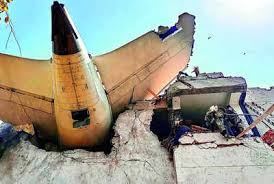
In the aftermath of a tragic aviation accident, such as the crash of Air India Flight 171, emotions naturally run high. The loss of life, the haunting images, the unanswered questions—all fuel a collective need for accountability and closure. Amid this turbulence, a select group of professionals have been entrusted with a duty that is both solemn and sacred: to uncover the truth. They are the investigators, often unseen, yet central to shaping our understanding of what really happened.
It may be considered naive by some, but there remains a quiet, unwavering belief that those tasked with such grave responsibility will discharge it with the utmost diligence, fairness, and honesty. After all, these are not ordinary people plucked from convenience—they are individuals chosen for their experience, integrity, technical knowledge, and sound judgment. Their qualifications are often the result of decades of flying, engineering, systems analysis, and accident reconstruction work. These are not jobs one stumbles into; they are vocations pursued with a sense of purpose.
And yet, in a world where misinformation, half-truths, and suspicion often dominate public discourse, even these professionals are not immune to doubt. We live in a time where institutional trust has eroded, where cynicism is more fashionable than faith, and where the allure of conspiracy often outweighs the patience to await conclusions. But in doing so, we risk undermining the very mechanisms designed to protect us.
The question we must ask ourselves is not whether the truth will be found, but whether we are willing to accept it when it is. Are we prepared to accept a mechanical fault if it exonerates human error? Or a lapse in judgment if the black box proves it? Or do we simply want someone—or something—to blame, regardless of what the data says? A corporation, a pilot, a system—any target that helps us make sense of tragedy?
Accountability and truth must not be confused with scapegoating. The purpose of an investigation is not to feed public sentiment, but to unearth facts. It is a cold, methodical, and often painfully slow process that relies on evidence, not emotion. The investigation into Air India Flight 171 deserves precisely this kind of objectivity—not speculation, not media noise, not political pressure.
For aviation professionals, the ultimate measure of an investigation’s value lies not in headlines or public satisfaction, but in safety—what is learned, what is fixed, and what is prevented. The goal is never punishment, but prevention.
So let us be cautious in our judgment. Let us remember that truth is not always dramatic, nor always satisfying. It may point to a systemic flaw, or a minute detail, or a confluence of errors that no single person could have foreseen. But it is still the truth.
In the end, we owe it to the victims, to their families, and to future passengers to let the process unfold. To believe in those few who carry the burden of investigation. And when the final report is written, let us read it not with suspicion, but with the dignity and respect it demands.
FADY Ex Military Veteran, Airline pilot with over 10000 hrs of flying on various fighter and commercial aircraft.
Editor’s Note: One thing that I was taught early in my career was that ‘if you point a finger at someone, three fingers are pointing back at you.’ The key point here being that we may think we are on top of the situation and know better than others, but let’s give chance to people who have been trusted with a task. Meanwhile, we can continue to give suggestions and feedbacks to help and support the investigation team. It is a Herculean task and definitely they will need support from all of us. I am grateful to everyone who has taken keen interest into finding the reasons of the recent accident.
As a human being we will remain short of perfect, be it engineers, managers, pilots, dispatchers, controllers etc etc or any other professional. Circumstances of every accident are so different, but we need to keep strengthening the system by ruling out reoccurrence of similar accident again. Caution Caution and more Caution.
Be Safe. Fly Safe.