Introduction: A Rotorcraft Revolution
Imagine a machine that soars through the air with the grace of a bird, its massive overhead rotor spinning freely like a windmill, generating lift not from engine power but from the sheer force of oncoming air. This is the autogyro (or autogiro), a rotorcraft that ingeniously combines elements of airplanes and helicopters. Unlike a helicopter, where the rotor is powered by an engine to provide both lift and thrust, the autogyro’s rotor is unpowered and relies on autorotation—a phenomenon where forward motion through the air causes the blades to spin and produce lift. Thrust comes from a separate, engine-driven propeller at the front, much like a traditional airplane.
Invented in the early 20th century, the autogyro bridged a critical gap in aviation history. In an era when fixed-wing aircraft demanded long runways and were prone to deadly stalls at low speeds, the autogyro offered a safer alternative. It could take off and land in remarkably short distances—sometimes just a few yards—making it ideal for urban environments, rough terrain, or emergency situations. Its significance lies not just in its practicality but in its role as a stepping stone to modern helicopters. As aviation historian Peter W. Brooks noted in his book *Cierva Autogiros: The Development of Rotary-Wing Flight* (1988), the autogyro “taught the world how to fly with rotors,” influencing designs that would dominate military and civilian skies. This article explores the autogyro’s history, from its turbulent beginnings to its lasting legacy, focusing on the genius of its inventor, Juan de la Cierva, and the innovations that made it soar.
The Visionary Behind the Machine: Juan de la Cierva’s Early Struggles
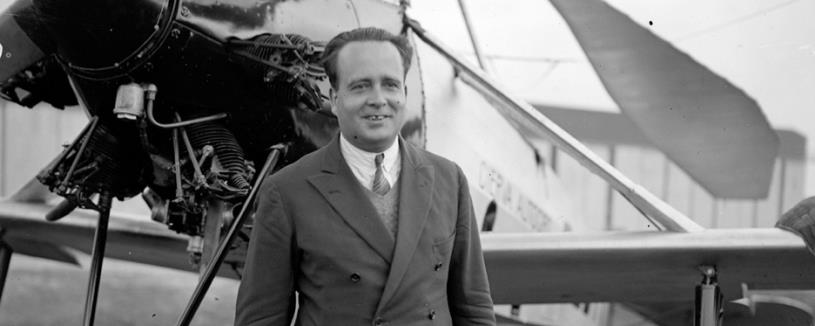
The story of the autogyro is inseparable from Juan de la Cierva, a Spanish engineer born in 1895 whose passion for flight was ignited by the Wright brothers’ achievements. In the 1910s, as Europe grappled with World War I, de la Cierva began experimenting with fixed-wing gliders and aircraft. His early designs, like the BCD-1 triplane bomber in 1919, revealed a harsh truth: airplanes of the time were dangerously unstable at low speeds, often stalling and crashing during take-off or landing. A fatal accident involving a friend in one of his designs in 1919 haunted de la Cierva, prompting him to seek a safer way to fly.
By 1920, de la Cierva shifted his focus to rotorcraft, inspired by the idea of using rotating wings for lift. His first prototype, the C.1, was a bold but flawed machine: a modified Deperdussin* monoplane with a four-bladed rotor mounted on top. The rotor was intended to autorotate, but during tests in Madrid, it failed spectacularly. The machine rolled over due to asymmetrical lift—the advancing blade (moving forward into the wind) generated more lift than the retreating blade (moving backward relative to the airflow), creating a torque that flipped the craft. As de la Cierva later recounted in his autobiography *Wings of Tomorrow* (1931), “The C.1 taught me that rotors were not just spinning wings; they were a battlefield of aerodynamic forces.”
Undeterred, de la Cierva iterated rapidly. The C.2 and C.3 models in 1921-1922 addressed some issues but still suffered from stability problems, including vibrations and control loss. The breakthrough came with the C.4 in January 1923. On a crisp morning at Getafe airfield near Madrid, test pilot Alejandro Gómez Spencer lifted off in the C.4, achieving the world’s first successful autogyro flight—a short hop of about 200 meters. This milestone, documented in contemporary issues of *Flight* magazine (1923), marked the autogyro’s viability. However, challenges persisted: early flights were marred by crashes, including one in 1924 that injured a pilot, underscoring the perils of asymmetrical lift and rotor blade stresses.
* Deperdussin monoplane refers to a series of early 20th-century aircraft produced by the Société de Production des Aéroplanes Deperdussin (often abbreviated as SPAD), a French aircraft manufacturing company founded in 1910 by businessman and aviation enthusiast Armand Deperdussin. These monoplanes were among the pioneering designs in the pre-World War I era, known for their sleek, high-speed capabilities and innovative construction techniques.
De la Cierva’s work was a race against scepticism and financial woes. Funded partly by the Spanish government and private investors, he relocated to England in 1925 to collaborate with the Cierva Autogiro Company, Ltd. There, he refined his designs amid a backdrop of aviation pioneers like the Wrights and Igor Sikorsky, who were exploring helicopters. Anecdotes from this period paint de la Cierva as a tireless innovator; he once tested rotor theories by attaching model blades to a bicycle and pedalling furiously, mimicking flight conditions.
The Flapping Hinge: Taming the Asymmetrical Beast
The autogyro’s early failures stemmed from a fundamental aerodynamic issue: in forward flight, the rotor disk experiences uneven lift distribution. The advancing blade slices through the air at higher relative speed, producing excess lift, while the retreating blade lags, risking stall. This imbalance could cause the aircraft to roll violently—a phenomenon de la Cierva dubbed “dissymmetry of lift.”
The solution arrived in 1922-1923 with the invention of the flapping hinge, a deceptively simple yet revolutionary device. Patented by de la Cierva (e.g., British Patent 189,513 in 1922), the flapping hinge allowed each rotor blade to pivot up and down independently at its root, attached to the hub. Think of it like a bird adjusting its wings mid-flight: when the advancing blade generates too much lift, it flaps upward, reducing its angle of attack and equalizing forces. Conversely, the retreating blade flaps downward to gain more lift. This self-regulating mechanism prevented rollover and enabled stable forward flight.
The impact was immediate. Incorporated into the C.6 model in 1924, the flapping hinge transformed the autogyro. In 1925, a C.6 made history with a 17-kilometer cross-country flight from Cuatro Vientos to Getafe, Spain, at speeds up to 100 km/h. As reported in *Aviation Week* (1925), spectators marvelled at its ability to hover-like in a strong headwind, descending almost vertically without stalling. De la Cierva demonstrated the C.6 across Europe, including a daring flight over London’s rooftops in 1928, captivating crowds and investors. This innovation not only solved stability issues but also reduced structural stresses, allowing rotors to spin at safer speeds (typically 100-200 RPM).
Key Benefits of the Flapping Hinge*:
- Equalizes lift across the rotor disk.
- Prevents dissymmetry-induced rollovers.
- Enables short takeoffs (as little as 30 meters) and near-vertical landings.
- Analogous to a seesaw: blades “flap” to balance forces dynamically.
* Without this hinge, the autogyro might have remained a curiosity; with it, it became a practical flying machine.
The Lead-Lag Hinge: Conquering Coriolis and Vibrations
As autogyros gained speed and reliability, another foe emerged: the Coriolis force. When a blade flaps upward, its center of mass moves closer to the rotor’s axis of rotation. Like a figure skater pulling in their arms to spin faster (conservation of angular momentum), the blade accelerates in its rotational path, trying to “lead” or advance ahead in the rotation. Conversely, when a blade flaps downward, its center of mass moves farther from the axis. This is like the skater extending arms to slow down—the blade decelerates, causing it to “lag” or trail behind in the rotation. In rigid rotors, this led to severe vibrations, blade fatigue, and even structural failure—issues that plagued early tests, including a 1926 crash of a C.7 prototype.
De la Cierva’s response was the lead-lag hinge (or drag hinge), introduced in the late 1920s. Patented in 1927 (U.S. Patent 1,947,901), this hinge allowed blades to pivot horizontally forward and backward relative to the hub, absorbing Coriolis-induced movements. Imagine the blades “hunting” like a dog’s tail wagging to dissipate energy; this freedom reduced vibrations and prevented cracks in the rotor assembly.
First implemented in the C.8 series (1927), the lead-lag hinge shone in the C.19 model, which featured a more powerful engine and enclosed cabin. In 1928, de la Cierva piloted a C.19 on a groundbreaking tour, flying from London to Paris in under three hours—a feat that stunned aviators. Demonstrations in the U.S., including at the 1929 Cleveland Air Races, showcased its smoothness; one anecdote tells of Amelia Earhart taking a joyride in a Pitcairn-Cierva autogyro, praising its stability. By the 1930s, these hinges enabled autogyros like the C.30 to achieve speeds over 160 km/h and altitudes of 5,000 meters.
Key Features of the Lead-Lag Hinge:
- Counters Coriolis acceleration/deceleration.
- Reduces in-plane vibrations and blade stress.
- Improves rotor durability for longer flights.
- Essential for high-speed operations, as seen in military prototypes.

Figure 1 : Flapping and Lead Lag Hinges
The Fully Articulated Rotor: Legacy and Applications
By the 1930s, de la Cierva’s innovations coalesced into the fully articulated rotor system—a hub with three types of hinges: flapping for lift equalization, lead-lag for vibration control, and feathering (pitch-changing) for cyclic control, allowing pilots to tilt the rotor disk for directional maneuvering. This system, detailed in de la Cierva’s 1933 patent (British Patent 393,976), powered models like the C.30, produced under license by companies like Pitcairn in the U.S. and Avro in Britain.
The autogyro’s heyday saw diverse applications. Commercially, it delivered mail in the U.S. (e.g., Eastern Air Lines’ 1930s routes) and served as aerial taxis. Militarily, the British used C.30s for reconnaissance during the 1930s, while the U.S. Navy experimented with ship-launched versions. A daring 1931 transatlantic attempt by a Pitcairn PCA-2 ended in failure due to weather, but it highlighted the craft’s potential.
Yet, the autogyro’s decline began post-World War II, overshadowed by powered helicopters like Sikorsky’s VS-300 (1939), which borrowed de la Cierva’s articulated rotor concepts. As Brooks notes, “De la Cierva’s hinges were the DNA of helicopter design.” Sikorsky himself credited de la Cierva in his memoir *The Story of the Winged-S* (1938).
Conclusion: A Lasting Whirl in Aviation’s Winds
Juan de la Cierva’s life ended tragically in 1936, at age 41, in a plane crash at Croydon Airport—ironic for a man who dedicated his career to safer flight. His legacy endures: over 500 autogyros were built in his lifetime, and his patents shaped rotorcraft engineering. Today, autogyros enjoy a revival in ultralight and recreational aviation, with modern designs like the AutoGyro Calidus offering affordable, fun flying.
De la Cierva’s hinges continue to inform and influence cutting-edge technologies, from drone rotors to urban air mobility VTOLs. As we push toward autonomous flight, the autogyro reminds us that innovation often spins from failure, bridging old dreams to new horizons. In the words of de la Cierva, “The rotor is not just a wing; it is freedom.”

Be Safe. Fly Safe.