Licensed aircraft production has long been presented as a pathway toward aerospace self-reliance in India. While final assembly under foreign licence builds manufacturing depth and workforce discipline, it does not necessarily translate into design authority, certification ownership, export autonomy, or lifecycle control. This paper examines India’s historical experience with licensed production, identifies structural economic and technological ceilings inherent in such arrangements, and evaluates whether current proposals for regional aircraft assembly represent strategic progress or repetition. The analysis argues that aerospace sovereignty requires design ownership rather than assembly optics, and proposes a design-first industrial pathway for India’s civil aviation future.
1. Introduction: The Mirage of Manufacturing
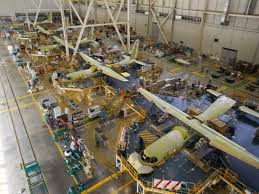
In aviation, industrial optics can obscure structural realities. The rollout of a locally assembled aircraft; complete with domestic facilities and ceremonial display, often generates headlines suggesting manufacturing sovereignty. However, final assembly of imported kits does not equate to ownership of an aircraft programme.
Licensed production typically preserves intellectual property, certification authority, upgrade control, and export rights within the originating OEM’s jurisdiction. While local factories may execute fabrication and integration, design authority remains external. What appears as self-reliance may in fact be structured dependency.
As India considers renewed proposals for regional and transport aircraft assembly, a central strategic question arises: Is India building aircraft—or building them for someone else? The distinction is foundational to aerospace sovereignty.
2. India’s Historical Experience with Licensed Production
India’s aerospace ecosystem has passed through multiple licence-production cycles. Hindustan Aeronautics Limited (HAL) assembled the HS-748, MiG-21, Jaguar, and later the Su-30MKI under various technology transfer arrangements.¹ These programmes generated valuable manufacturing capability, workforce skill, and industrial discipline.
However, the strategic outcome remains limited in one crucial respect: few globally competitive Indian-designed aircraft families emerged from these decades of licence assembly. While fabrication and systems integration matured, programme ownership did not.
India mastered assembly. It did not acquire design authority in equivalent measure.
3. Structural Ceilings in Licensed Production
Licensed production arrangements inherently impose three structural ceilings: economic, technological, and commercial.
3.1 Economic Ceiling
Value capture in aerospace is disproportionately concentrated in engines, avionics, intellectual property, and lifecycle support. Final assembly contributes a relatively small share of programme profitability.² Licence fees, imported subsystems, vendor-locked spares, and specialised tooling limit domestic margin expansion.
Large capital investment may therefore generate modest value retention.
3.2 Technological Ceiling
Without design authority:
- Source codes remain proprietary.
- Major upgrades require OEM approval.
- Certification ownership remains external.
- Lifecycle modifications are constrained.
In aviation, design control determines service bulletins, configuration evolution, and sustainment autonomy. Assembly competence cannot substitute for configuration authority.
3.3 Commercial Ceiling
Exports; the lifeblood of any sustainable aircraft programme, typically require OEM consent under licence agreements. After-sales support ties to foreign supply chains, and marketing channels remain externally controlled. Manufacturing may occur locally, but strategic leverage does not.
4. Lifecycle Dependence: The Su-30MKI Case
The Su-30MKI programme is frequently cited as a successful indigenised production model. India assembled over 200 aircraft domestically, achieving substantial manufacturing scale. ³
However, audit findings and sustainment reviews have highlighted complexities related to imported spares, lifecycle cost sensitivities, and technical dependencies.⁴ These are structural characteristics of licence production rather than platform-specific anomalies.
The key metric is not acquisition price per aircraft. It is about who controls upgrades, sustainment architecture, and lifecycle evolution over decades.
Assembly does not automatically confer autonomy.
5. Tooling Economics and Industrial Rigidity
Aircraft production requires highly specialised tooling; jigs, fixtures, gauges, drill templates, designed for specific geometries. These assets are rarely transferable across programmes.⁵
When production ends, tooling becomes stranded capital. Unlike automotive manufacturing, aerospace lines are not modular or easily reconfigurable. Without follow-on variants or export demand, assembly lines risk underutilisation.
This explains why global OEMs concentrate final assembly in limited locations while distributing design and systems engineering globally.
6. Demand Is Not Value Capture
India and South Asia are projected to require over 3,000 new aircraft over the next two decades.⁶ Demand is not in question.
However, in a typical commercial aircraft programme:
- Engines and propulsion: 25–30% of programme value
- Avionics and systems: 15–20%
- Design, certification, and IP: 15–20%
- Structures and supply chain: 25–30%
- Final assembly: less than 10%⁷
Final assembly is the most visible component; but not the most valuable.
Negotiating solely for assembly is strategically equivalent to operating a boarding gate while another entity owns the airline.
7. India’s Existing Aerospace Capability
India already contributes significantly to global aerospace supply chains. Boeing, Airbus, Safran, and Collins Aerospace source aerostructures, composite components, precision forgings, avionics software, and engineering design services from Indian firms.⁸
The technical capability exists. The missing link is programme ownership.
India functions effectively as a supplier nation. It has not yet transitioned to prime aircraft nation status.
8. The Export Constraint
Aircraft manufacturing is sustainable only through exports. Domestic demand alone rarely amortises development and tooling costs. ⁹
Licensed production typically restricts export autonomy. OEM approvals, foreign marketing channels, and aftermarket dependencies constrain strategic reach. Without export freedom, production lines operate cyclically rather than continuously.
Contract manufacturing does not build aerospace ecosystems. Programme ownership does.
9. Emerging Assembly Proposals: Opportunity or Repetition?
Recent proposals for regional aircraft assembly in India present genuine industrial opportunities. They can deepen supplier skill, generate employment, and expand maintenance expertise.
However, for such arrangements to constitute strategic advancement, they must include:
- Export rights
- Design participation
- Technical data access
- Local maintenance and overhaul authority
- Integration of Indian suppliers
- Continuity beyond single production blocks
Absent these elements, assembly risks becoming an industrial apprenticeship rather than a sovereignty milestone.
10. A Design-First Strategy
For sustainable aerospace autonomy, design must precede assembly. A domestically led 90–120 seat regional aircraft programme could offer:
- Manageable certification complexity
- Clear domestic demand alignment
- Lower capital threshold than advanced fighters
- Export flexibility
- Supplier ecosystem integration
Foreign engines and subsystems may be licensed initially, but platform ownership; airframe design, systems architecture, certification control, must remain domestic.
Historical examples demonstrate that small nations have prioritised design authority over scale. Sweden’s aerospace ecosystem and Israel’s aviation sector emphasised indigenous design control before mass assembly.¹⁰
Scale matters. Sovereignty matters more.
11. Redefining the Metric of Success
For decades, aircraft assembly counts have been used as indicators of industrial success. This metric is incomplete.
A more relevant framework asks:
- Who owns the design?
- Who controls certification?
- Who authorises upgrades?
- Who exports freely?
- Who captures lifecycle revenue?
Assembly builds factories. Ownership builds sovereignty.
India possesses engineering talent, supplier depth, and domestic demand. The remaining requirement is strategic clarity: aerospace strength derives from drawing one’s own blueprints, not tightening bolts on foreign ones.
Conclusion
Licensed production has undeniably forged India’s aerospace backbone; honing factories, networks, and hands capable of world-class precision. Yet as history whispers from HAL’s hangars to today’s assembly ambitions, it delivers competence without command.
India now faces a defining pivot. Will it remain a masterful assembler, tightening foreign rivets for fleeting headlines? Or claim its birthright as a designer, scripting blueprints that soar on Indian terms; certified, upgraded, exported, and sustained by its own sovereignty?
True aerospace power is not measured in airframes rolled off lines, but in the authority to dream, certify, and conquer skies worldwide. In 2026, with talent unmatched and demand assured, India holds the drafting table. The next chapter awaits not in licensed shadows, but in designs stamped indelibly: Made in India, Mastered by India.
Assembly builds tomorrow’s workforce. Ownership launches tomorrow’s empire. Choose boldly.
Be Safe. Fly Safe.
Editor’s Note:
Is India still stuck in 2nd Industrial revolution of mass production. Remember Henry Ford, who further developed this concept in late 19060s. Are we happy with large scale (?) production to meet our local requirements. This is like we still live in sellers market. While the world has moved to 3rd industrial revolution and even revolutionary 4th and 5th industry state which encompasses environmental sustainability, open architecture, reliability, interoperability and data driven production which basically means buyer oriented market. This new state is a new normal and ensures a streamlined processes for mass production of product variants with increasing emphasis on quality and uniqueness. How long before we reach there? Or with present thrust on licence production in aviation, will we ever reach there?
References
- Hindustan Aeronautics Limited, Annual Reports and Historical Production Data, various years.
- Deloitte, Global Aerospace and Defense Industry Outlook, 2022.
- Ministry of Defence (India), Parliamentary Standing Committee Reports on Defence Production.
- Comptroller and Auditor General of India, Report No. 14 of 2014 (Air Force and HAL Production Review).
- International Air Transport Association (IATA), Aircraft Manufacturing and Supply Chain Analysis, 2021.
- Boeing, Commercial Market Outlook 2023–2042; Airbus, Global Market Forecast 2023–2042.
- MBA.aero, Commercial Aircraft Cost Breakdown Analysis, 2022.
- Boeing India Fact Sheet; Airbus India Industrial Footprint Briefing (2023–2024).
- Teal Group Corporation, World Civil Aircraft Briefing, 2022.
- Swedish Defence Materiel Administration (FMV) and Israel Aerospace Industries (IAI) historical programme documentation.