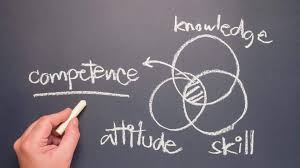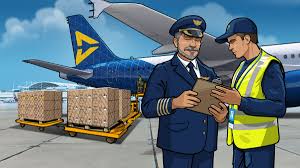
Leadership is the most intensely personal thing in the world and requires certain kind of personality and qualities. The first of these is courage, the next is willpower, the third is initiative and the fourth is knowledge.
After the Air India Flight 171 that crashed 32 seconds after take off from Ahmedabad Airport in India on 12 June 2025, every news channel played the video more than thousand times. The blood curdling video had all of us wondering, should we be boarding the next flight or not? But we the flight crews, as professionals were ready to face the challenge, went about our way as if nothing had happened. This is the kind of courage I am talking about. As a leader you need to have more courage than your fellow crew and passengers. Willpower – yes it requires willpower to keep doing the same thing everyday with perfection. To be able to take flight at unwelcome hours and doing the same procedure thousandth of time. Yes, it is boring and repetitive but willpower takes us along. Next comes initiative which is very simple. This means, that you don’t sit down, do nothing, and wait for something to happen, because, if you do that then the aeroplane will take you for a ride. The way the crew takes initiative is by thinking ahead. You are thinking of weather ahead, non-normal situation that may occur or errors or mistakes that can happen. Now, fourth and the last is knowledge. We as a flight crew have no business to be in the aircraft unless we are sure about what we are doing. All doubts and questions should be settled before aircraft unsticks from terra firma. If you can’t, then just ask for one more simulator session or have a chat with senior pilot or chief pilot. Whenever there is any doubt, there is no doubt and we should not proceed further. Do not waste time evaluating risk or assessing if it is real.
Human factors account for up to 70 percent of aviation incidents. While mechanical failures and environmental conditions often appear in investigations, leadership; or its absence, plays a decisive underlying role. Leadership failures typically manifest as poor communication suppressing critical information exchange, ineffective decision-making due to steep authority gradients discouraging subordinate input, and inadequate coordination leading to task duplication or omission.
Conversely, strong leadership acts as a safeguard against these risks by fostering a collaborative and safe cockpit environment. Effective leaders enhance CRM by promoting assertive communication, shared situational awareness, and timely, informed decision-making. This synergy improves operational efficiency and significantly reduces accident likelihood, reinforcing leadership as a core component of aviation safety management.
Leadership Development: A Practical Approach
Aviation leadership develops progressively, like constructing a building: core values and ethics form the foundation, establishing credibility and trust vital in safety-critical environments. The structure rises through discipline, operational knowledge, and experience, enabling sound judgment and effective pressure performance. The root is self-development and continuous improvement, ensuring adaptability to evolving challenges.
- Develop the courage of your convictions- the courage to stand up and accept your mistakes because tomorrow you will lead a team which will follow your orders even when you are wrong. And once you become Instructors’ you should have even greater courage in saying this person is not qualified and worthy of promotion and stick to it whatever the pressure. Do not promote someone because s/he is nice guy, has a family or EMI to pay.
- During your long career in aviation, opportunity will arise for you to display personal courage and leadership. But never display recklessness and expose your team or passengers to unnecessary risks or reduce their normal chances of survival.
- Do not wear leadership on your sleeves, on your shoulders, on your caps or on your calling cards. Learn to trust your team for loyalty and devotion to aviation safety. They will match your courage, endurance, motivation and desire for achievement. But there’s a catch, provided you assume responsibility, display courage, willpower, initiative and knowledge.
- Flight Crews advance through structured and experiential learning, with increasing responsibility and formal training refining technical and interpersonal skills.
Some Do’s and Don’ts
“Dos and Don’ts” lists are helpful because they provide clear, concise guidelines for acceptable and unacceptable behaviours or actions in specific situations. This helps individuals understand expectations, avoid mistakes, and achieve desired outcomes by focusing on what to do and what not to do.
DOs
- Do make your motto ‘do it now’ and stick to it all times.
- Do everything you do, thoroughly.
- Be punctual.
- Do respect everything that belongs to your company or organisation.
- Every organisation has plus and weak points. For heaven’s sake, don’t discuss corporate issues in public.
- Do own up your mistakes before you are found out. Seek help from fleet supervisor or chief pilot, if required.
- Do remember that the duties of your profession, which require you to keep yourself physically fit and mentally alert.
- Do remember that as flight crew your acts and words are trusted. You should be proud of and care for it.
DONTs
- Don’t be too “dressy” but do be smart in your turn-out at all times.
- Don’t be snobbish or conceited; it is bad manners and it does NOT do any good in life.
- Don’t brag of what you can do at games and at your work. Let the others find out for themselves what you are really worth.
- Don’t ever sign any document, official or otherwise, without first reading it from top to bottom.
- Don’t grouse that you have the most hectic roster of the airline. Grousing is a sure sign of slackness and SLACKERS are NOT wanted.
- Don’t ever make a statement, unless you are sure of facts and figures.
- Don’t for goodness’s sake talk ‘SHOP’ in front of passengers or others.
- Don’t be too flashy about your work. Go about it quietly and unassumingly.
- Don’t, please don’t, sulk if you get ticked off by your senior for any mistakes you may make.
- Don’t ever criticise others or brag about yourself.
Conclusion
Leadership in aviation transcends rank or formal titles; it is a continuous practice evident in every decision, briefing, and interaction. Effective leaders demonstrate discipline, accountability, empathy, and collaboration. They navigate diverse personalities professionally, leverage team strengths, and cultivate trust, and mutual respect.
As aviation complexity grows, leadership’s role as a safety-critical competency becomes more vital. Whether shaped by military rigor, business insights, or aviation-specific CRM, the fundamental truth remains: effective leadership is not just a professional attribute; it is a decisive factor in preventing errors, optimizing team performance, and saving lives.
Fly Safe. Stay Safe.