In India, air travel demand peaks during the December holiday season (Christmas/New Year) and the summer months of May and June due to school vacations, with significant spikes also occurring during the extended Diwali/wedding season. If you were one of hundreds of thousands of people caught up in the recent cancellation crisis at IndiGo Airlines and were negatively affected or an aviation enthusiast or leadership, organisation culture then kindly read-on to understand several lessons we can take from this situation and make aviation industry more robust and responsive. Before we begin, I must caveat that I have no inside information either from the airline industry or aviation regulator. I am merely drawing on my general knowledge of leadership, organizational culture, military knowledge and aviation experience as a pilot. So while my experience and knowledge are limited, I still think I can offer some insights that can be useful to aviation industry. These lessons revolve around the need for adaptability and decentralization in such situations in particular but also in this Information Age in general.
Recap of the Situation
India’s commercial aviation has seen explosive growth in the last decade, becoming the world’s third-largest domestic market, driven by rising incomes, UDAN scheme connectivity, and massive airport expansion (74 to over 150 airports). Despite challenges like infrastructure strain and high fuel costs the industry holds vast potential, with projections to become the third-largest global passenger market by 2030. The new FDTL rule were initially meant to be implemented from Jun 2024, however were paused due to pressure from various airlines. Finally, it was implemented in phased manner in Jul and Nov this year. Despite extended preparatory window, the implementation of FDTL scheme lead to long delays and cancellations.
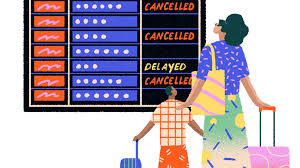
Initial speculation pointed to multiple factors from inclement weather, crew shortage, congestions etc but it could not account for complete breakdown of system and huge percentage of the flights being cancelled and especially when compared with other airlines of the country. On ground, the airline was unable to give any information to the passengers about their flight cancellations or extent of delays. The passengers were boarded and then asked to de-board which caused further confusion and erosion of trust between passenger, staff and management. The dispatchers were unable to track the location and status of aircrew and aircraft. The frontline staff was left alone to face throngs of frustrated passengers. I have no doubt that airline staff did everything they could to accommodate the passengers, but their efforts were woefully inadequate because they lacked the proper tools and support. An incident similar to what happened with Southwest Airline of America in 2022 was being replayed in India across the length and breadth of country. What would be cost of such a misadventure in terms of lost revenue or trust of many valued passengers and their own employees is not yet fully known.
Centralised Command and De-centralised Control & Execution
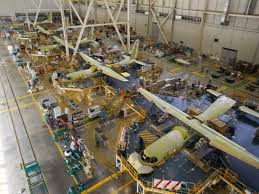
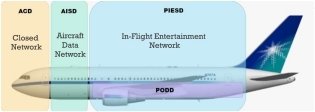
Airline operations are complex and based on system of systems. A System of Systems (SoS) is a collection of independent, operational systems that integrate to achieve a larger, common mission. Airlines, Air Traffic Control (ATC), Emergency and Safety services, ground support, and security systems etc all coordinating for safe and efficient flights. The airline operations are delicately managed for efficiency and profit. All of this is coordinated by a complex systems that track the location and status of aircraft and crew members and their movement around the network. Their routes, fuel and payload, crew member staging, and crew accommodations at the destination are all centrally managed to optimize that efficiency. Since any perturbation can cause unanticipated second- and third-order effects, these systems also help to resolve problems caused by disruption in as efficient a manner as possible. When anything goes wrong, these systems depend on immediate and constant access to vast amounts of data, requiring steady communication between the central office and all operating locations. When that communication is inhibited, these systems become useless, unable to adapt to the situation. This means that such systems optimised for efficiency become worthless in crises (when they are needed most) thus crippling their users just as Southwest Airline operations were crippled in 2022.
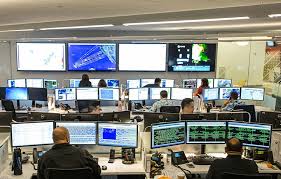
These centralized systems are the result of Industrial Age thinking. A Centralized Center is a core hub that integrates data, monitoring, and operations for an organisation, acting as a “nerve center” to provide real-time situational awareness, manage emergencies, and coordinate responses enabling unified decision-making and efficient management of complex operations. But now in the Information Age, technology enables that efficiency much more easily, meaning that the new competitive advantage comes from centralized command and decentralised control and execution. This provides adaptability to disruption. This is a strategic framework, especially in military and complex systems, where high-level goals and resource allocation are set centrally, but decisions and execution are delegated to lower, local levels, allowing for faster, adaptable action on the ground while maintaining strategic alignment. It balances broad strategic oversight with localized tactical autonomy, making it ideal for dynamic environments where central leaders can’t know everything but need to ensure actions support the overall mission. Recent examples of centralised command and control going wrong are-
- When hundreds of pilots and cabin crew reported that “We were available for flights but were not assigned duties”.
- Total loss of communication with passengers during the crisis.
- Southwest Airline Meltdown in 2022 due to severe weather in North America.
- In Jul 2024, a faulty update to CrowdStrike’s Falcon endpoint security software corrupted Windows systems resulting in significant disruptions of airline operations and delays.
The military has moved beyond the centralised command and control model that has worked so well in the Industrial-Age-minded past to a system of “centralised command, distributed control, and decentralised execution”. The new process is required for any future war or military operations in which communication are likely to be cut off by enemy action. This is equally important for the corporate world, as increasingly sophisticated cyber-attacks can quickly render any organization’s communication methods inoperable. This makes organizations that rely on centralized decision-making and its enabling systems especially vulnerable. Thus, what used to be a competitive advantage is now a liability. Instead, those who distribute decision-making ability to the lowest possible level will be much more adaptable and less vulnerable and thus will have the competitive advantage.
Sharing Information
The data needs to be available at all operating locations and shared with all who need it in order to facilitate decentralized decision-making. In the information Age, data is the most important commodity, so its movement is the most important thing to be optimized. The core problem in all the above cases of airline flight disruption was that the data was not available and therefore had to be passed using phone calls, which was inadequate. The data required simply could not be ingested, processed, and output in anywhere near the volume needed. Thus, the centralized system became the single point of failure.
In my opinion if the local leadership has access to all the data, trained and empowered to control and execute with the available resources, the level of disruptions would have been much less pronounced. Also, if some of that data was available and subsequently shared with passenger as information, the vast majority of the frustration would have been eliminated as well. The most frustrating part of this situation for a passenger was the lack of information. Lack of information for passengers also causes anxiety which in turn leads to angry customers. Conversely, regular and honest updates have a calming effect, instilling hope that the situation will be resolved and thus fostering cooperation in customers in addition to reducing the strain on employees.
De-centralise Decision-Making & Execution
Whether intentional or not, Industrial Age systems perpetuate the Industrial Age mentality that undervalues the ability of people at all levels to make decisions. This leads to possibly the most important lesson: empowering employees by equipping people at all locations with the tools that enable them to coordinate with each other and make decisions when communications with the Command office are limited. With the proper knowledge, training, and tools, employees at any level and location can make critical decisions. Computer systems need to help people make sense of information in order to make decisions. The processes and systems of the organization need to work for the people in the organization, not vice versa. Those processes are the responsibility of leadership, so part of taking care of people is giving them the right tools and processes to empower their ability to make decisions that will serve the customers. Thus, investment in these tools should be properly prioritized, with their long-term benefits in helping employees to serve customers better weighed more heavily than their immediate price tag.
If local leadership had possessed decision making and execution authority, the number of cancellations could have been reduced. When combined with honest efforts, and frequent status updates, passengers would have become more flexible and patient with airline staff and would have become part of the broader team to resolve the situation by changing their travel plan according to situation. This may have resulted more people reaching their destination faster.
Ultimately, leaders need to serve their people first so that their people can in turn serve their customers.
Supporting Aviation Workforce
People in commercial aviation are crucial for connecting the world, driving economies, and enabling global trade by safely transporting passengers and cargo, with roles spanning pilots, cabin crew, air traffic controllers, engineers, and ground staff who manage complex operations and ensure adherence to strict safety standards, creating millions of jobs and supporting diverse industries. In my opinion, the failure of Regulator to support this large workforce is far worse than Regulator’s inability to prevent such large scale delays and cancellations. It is through this workforce that Regulator and airlines support and serve their customers. The Regulator is equally to be blamed for rolling out policies which support corporates, culture of monopoly, compromising with safety, prioritising profits over needed system upgrades and ignoring persistent warnings from the employees and associations. There is a desperate need for having aviation workers union.
Workers’ unions are crucial for balancing employer power, giving employees a collective voice to secure better pay, benefits, and safer conditions through collective bargaining, while also promoting workplace equality, job security, training, and advocating for broader labor rights and social justice. In aviation, a worker union also works as guardian of safety and security, advocate better practices to reduce fatigue and stress and worker well-being. At present, in India we do not have body representing pilots/cabin crew or ground staff with which Regulator engages regularly before taking decisions or forming policies. Having a workers union or body is very important for long term health of aviation industry in India which is growing at the fastest rate. The focus on short term growth and profit is very similar to situation at Boeing that led to 737 MAX crashes.
Honesty and Humility
This leads to another broader lesson for leadership in general: the importance of both honesty and humility. Honesty and humility are foundational to great leadership, building trust, fostering open communication, and driving team success by encouraging authenticity, accountability, and continuous learning, where humble leaders admit mistakes and value others’ input, while honest leaders ensure transparency and ethical alignment, creating psychologically safe environments for innovation and growth. In essence, humble honesty creates a powerful dynamic where leaders are seen as authentic, supportive, and committed to the collective good, rather than just their own status, leading to more effective and ethical organisations.
Conclusion
In the end, the recurring situation of delays and cancellation in aviation is yet another example of the importance of shifting from an Industrial Age mindset of centralised control optimised for efficiency to an Information Age mentality of technology-enabled decentralised control and execution, to achieve the adaptability and flexibility that are required to be competitive in the modern era. This incident should serve as a reminder to all organisations of the importance of decentralising their decision-making, providing the right tools and data to all of their people, giving them adequate support, and approaching both employees and customers with honesty and humility.
Be Safe.Fly Safe.