London, 1958. A sleek new jet lifts off into a rainy dawn, its engines slicing the sky like a prophecy. In seven hours, it will touch down in New York; an act so routine today it barely merits a yawn, but back then, it was nothing short of magic.
The jet airliner had arrived. And the world would never be the same.
This wasn’t just faster travel; it was civilization, accelerated. The jet shrank continents, stitched economies together, and turned “far” into a matter of scheduling. What once took days now took hours. The ocean was no longer a barrier but a blur beneath a pressurized fuselage.
The airplane became more than a machine; it became an era. One that redefined what it meant to be modern.
This is the story of how a marvel of metal, math, and ambition took flight; and with it, carried the 20th century into the future. Expect cold war urgency, mile-high innovation, bureaucratic chess, and the quiet triumph of engineering over distance.
Because in the age of the jet, even the sky stopped being the limit.
Fasten your seatbelt. This ride includes blueprints, billion-dollar bets, and enough thrust to change the world.
From Props to Jets: A World Eager to Accelerate
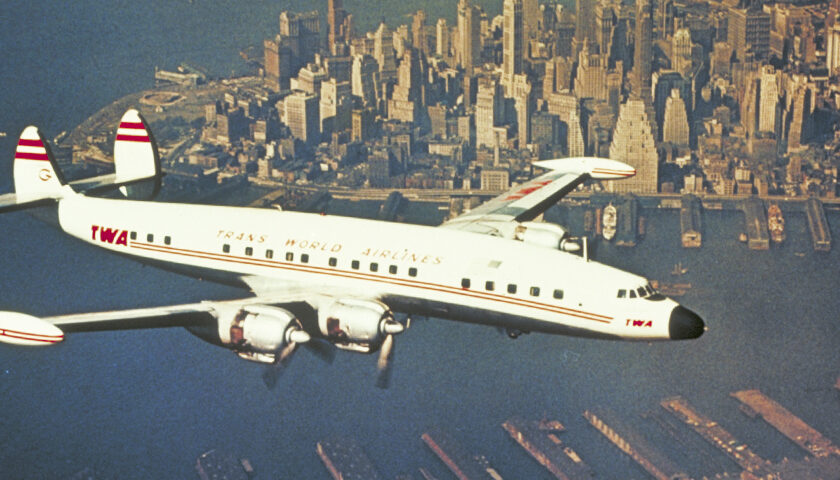
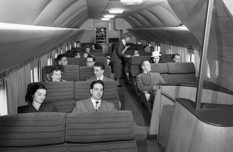
Before the jet age roared to life, air travel was an affair of silk gloves, slow climbs, and scenic detours. Propeller-driven aircraft like the Lockheed Constellation and Douglas DC-7 graced the skies with the elegance of a bygone ballroom; cruising low enough that passengers could spot ocean liners below, and occasionally smell the salt in the air.
The Constellation had ashtrays in every seat and pressurized cabins, yet crossing the Atlantic still took over 13 hours; with turbulence, noise, and a smoking section that was basically… the whole plane.
Butt the world was itching to move faster. Business wanted to compress continents; diplomacy couldn’t wait; and tourism had ambition. The breakthrough came in 1952 with the de Havilland Comet; the world’s first commercial jetliner. It looked like the future, moved like the future, and, unfortunately, cracked like it, too.
The Comet’s fatal flaw wasn’t in its engines but in its engineering innocence. Repeated in-flight breakups revealed metal fatigue around its square windows; an oversight that turned optimism into autopsy. The skies, it turned out, were unforgiving professors.
Still, failure taught aviation its most important subject: redundancy, pressurization dynamics, and structural resilience. Jet travel would demand not just thrust, but rigor.
And soon, a new generation of aircraft emerged; not with brash promises, but quiet confidence. Testbeds like the Model 367-80; better known as the “Dash 80”, proved that swept wings, jet engines, and commercial reliability could coexist.
From such prototypes came the archetype: the early jetliner. Not flashy, not flamboyant; but transformative. It could fly higher, faster, smoother, and farther than its propellered predecessors. More importantly, it could do so day after day, route after route, without rattling itself apart or bankrupting its operators.
It didn’t just change the airplane. It changed what people thought was possible at 600 miles an hour.
The Jetliner That Made Speed Boring (And That Was the Point)
When the first commercial jetliners began gliding above the weather and racing past their propellered ancestors, it wasn’t just a leap in technology; it was a change in tempo. The world was suddenly smaller, and time itself seemed negotiable.
Early jetliners brought a new vocabulary to commercial flight: altitude, speed, range, reliability. Not just engineering specs, but a promise: you could cross oceans before your coffee went cold.
No longer did air travel require stamina and social status. The jetliner made flying routine; and in doing so, it made the extraordinary feel… ordinary. And that was its magic trick.
Design-wise, the early jets weren’t trying to look like sci-fi dreams. They were pragmatic marvels:
- Swept wings for aerodynamic efficiency at higher speeds
- Turbojet or turbofan engines mounted under the wings for thrust and safety
- Cabin pressurization refined and reimagined for sustained cruising at 35,000 feet
And most importantly, they introduced a new rhythm to the world economy.
Early jetliners cut transatlantic flight time nearly in half, but passengers still dressed in suits and gowns; because if you were defying gravity at 600 mph, you might as well look good doing it.
The jetliner wasn’t just a mode of transport; it became an infrastructure of connection; a node that stitched together cities, created new expectations for speed, and quietly bullied time zones into irrelevance.
Airports had to evolve: runways stretched longer, terminals grew wider, and the smell of kerosene became a new urban scent. Timetables collapsed. Globalization, in many ways, began at the gate.
Jetliner Families: Built for Purpose, Designed to Evolve
As the jet age took shape, it became clear that no single aircraft could serve every mission. The sky demanded specialization; from short urban hops to intercontinental hauls. Enter the jetliner family: modular aircraft lineages that shared cockpits, parts, and design logic, yet varied in size, range, and role. Like siblings in uniform, each was optimized for a different task, but built on a common foundation.
At one end of the spectrum were the narrowbodies; agile, single-aisle jets seating between 130 and 240 passengers. These were the fleet’s tireless commuters, linking city pairs like New York–Chicago or Paris–Rome with frequency and speed. With short turnaround times and the ability to operate from smaller airports, they powered the rise of budget carriers and regional connectivity. Efficient, dependable, and omnipresent, they became aviation’s everyday backbone.
At the other end flew the widebodies; twin-aisle giants built for long-haul, high-capacity routes. With ranges exceeding 8,000 nautical miles and room for 250 to 600+ passengers, they made non-stop flights between distant continents not just possible, but profitable. These aircraft carried more than people; they carried economies; hauling freight, connecting hubs, and enabling globalization at cruising altitude. Whether outfitted with lounges and suites or simply optimized for payload, widebodies became the heavy lifters of the global network.
The brilliance of this family-based approach lay in its coherence. Airlines could train crews across models, consolidate maintenance operations, and adapt fleets to fluctuating demand with surgical efficiency. Over time, these families evolved; stretching fuselages, upgrading engines, refining aerodynamics, to meet the rising pressures of cost, competition, and carbon. What emerged was less a product and more a platform: iterative, adaptable, and engineered to last.
Today, jetliner families remain central to aviation strategy. Narrowbodies open the map; widebodies redraw it. One links regions, the other links worlds. And as the industry shifts toward cleaner propulsion and smarter systems, tomorrow’s fleets will still echo the same principle: build for purpose, evolve with care, and let no route go unserved.
The Dreamliner: High Tech, Low Drag
The 787 Dreamliner was Boeing’s moonshot for the 21st century. It ditched aluminium for composite materials, featured larger windows, better cabin pressure, and less jet lag.
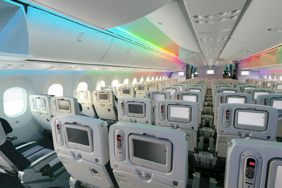
It was also a test of global coordination. Major sections were outsourced: wings from Japan, fuselages from Italy, electronics from everywhere. The result? Innovation and headaches. Schedule slips. Supplier snafus. But the plane flew, and airlines loved it.
Behind the Scenes: The Dreamliner’s complex supply chain led to one Boeing exec famously quipping: “We outsourced too much, and we forgot how to build an airplane.”
Rivals, Setbacks & Lessons in Humility
Boeing’s story isn’t one of solo brilliance. Its main rival, Airbus, emerged in the 1980s, igniting an race in fuel efficiency, cockpit design, and order books.
With that came missteps: delayed programs, supply-chain misfires, and (most recently) the 737 MAX crisis; a sobering reminder that safety isn’t optional.
But aviation is a business of fail-safe learning. Every accident leads to redesign. Every design flaw leads to regulation. As a result, flying today is safer than crossing a busy street.
More Than Planes: Airports, Economics & Global Reach
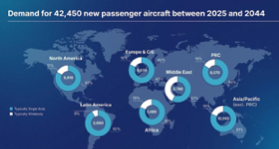
Jetliners reshaped far more than the skies; they redrew the very landscape of modern infrastructure and commerce. Airports stretched runways and widened gates to accommodate their size, while maintenance and overhaul industries grew into global networks, keeping fleets aloft long after delivery. Pilot training expanded into an international enterprise, producing generations of aviators fluent in standardized cockpits. Meanwhile, air cargo transformed from a niche sideline into a vital artery of global trade, carrying everything from online orders to life-saving vaccines with speed that ships could never match.
The true business of the jetliner was never just in the sale of an aircraft; it was in the lifecycle that followed. Spare parts, simulators, training, maintenance contracts: each aircraft became not only a machine, but an ecosystem. Long after its first take-off, the revenue; and the reach, kept flying in.
The Jumbo Era: Democratizing Long-Haul Travel
If the first jetliners made global travel possible, the jumbo jetsmade it affordable. Their sheer scale transformed the economics of flight; lowering the cost per seat so dramatically that intercontinental travel shifted from an elite privilege to a middle-class aspiration. Suddenly, the world’s great capitals and distant resorts were no longer the domain of diplomats, tycoons, or movie stars, but of students, families, and backpackers with guidebooks in hand.
The jumbo was more than an airplane; it was a social leveller. Its double aisles and cavernous cabins forced airports to expand, spurred the rise of mega-hubs, and demanded new choreography for boarding, catering, and baggage handling. It wasn’t just moving people; it was moving systems. At the same time, its vast cargo holds accelerated global supply chains, enabling industries to trade at the speed of demand.
But perhaps the most remarkable achievement of the jumbo jet was cultural. Its unmistakable silhouette became a symbol of aspiration, adventure, and even romance. It shrank the planet to a scale that allowed families to reunite, tourists to explore, and businesses to stretch across continents. The so-called “Queen of the Skies” embodied not just engineering muscle, but the democratization of distance itself.
Twins Take Over: Efficiency and the New Long-Haul
As jet engines grew more reliable and fuel prices climbed, the age of the four-engine giant began to wane. A new rule; ETOPS, or Extended-range Twin-engine Operations, rewrote the playbook. It allowed twin-engine jets to fly long overwater routes once reserved for aircraft with three or four engines. Suddenly, two engines weren’t just enough; they were ideal.
The rise of the twin-engine widebody marked a quiet revolution. With lower fuel burn, simpler maintenance, and leaner operating costs, these aircraft gave airlines freedom to redraw their route maps. No longer tied to mega-hub pairings, carriers could connect smaller cities across oceans; “long-thin” routes that were once commercially unthinkable.
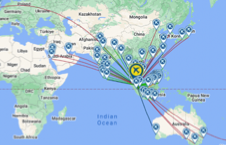
For passengers, twins offered new comforts: quieter cabins, more efficient layouts, and increasingly direct journeys. For airlines, they became economic workhorses, balancing range with efficiency in a way that reshaped long-haul travel. Where the jumbo symbolized scale, the twin embodied precision. It was not about carrying everyone—it was about carrying the right number of people, to the right city, at the right price.
The Dreamliner: Composites, Comfort, and New Possibilities
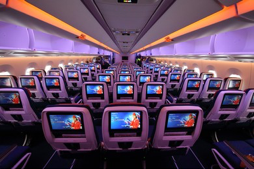
If the jumbo jet symbolized scale and the twin embodied efficiency, the composite airliner became a statement of ambition. The new generation of long-haul jets; epitomized by the Dreamliner era, wasn’t built from riveted aluminium but from carbon-fibre composites, a leap in materials science that promised lighter weight, lower fuel burn, and greater durability.
But the revolution wasn’t only structural. These aircraft reimagined the passenger experience. Larger windows, higher cabin humidity, improved pressurization, and quieter engines turned long-haul flying from an ordeal into something closer to comfort. The plane was engineered not just for fuel efficiency but for human endurance; a recognition that passengers, too, were part of the payload equation.
Strategically, the composite jet reshaped airline networks. Its efficiency and range made it economical to connect “secondary cities” directly; routes once dismissed as uneconomical. Instead of funnelling every traveller through massive hubs, airlines could now stitch together new, thinner corridors across the globe. The effect was subtle but profound: the hub-and-spoke model began to bend.
Yet innovation came with turbulence. The globalized supply chain that built these aircraft; fuselages from one continent, wings from another, introduced complexity and, at times, costly delays. The lesson was clear: building the future required not just bold design, but careful orchestration.
Still, the legacy of the composite jet is undeniable. It proved that an aircraft could be smarter, lighter, and kinder to passengers, while rewriting the economics of long-haul travel. It wasn’t just another machine; it was a new philosophy of flight.
Tomorrow’s Skies: Green, Quiet, Smart
The future is turbulent; not because of demand, but because of carbon.
Aviation must reduce emissions while keeping up with growth. Boeing’s roadmap includes:
- Sustainable Aviation Fuels (SAF)
- Hydrogen and electric concepts
- AI-optimized operations
- Lighter materials and smarter design
But here’s the rub: current battery tech is better suited to toasters than transoceanic travel. So, expect evolution before revolution.
“The future may be green; but it won’t be quiet. Electric motors are silent. Passengers aren’t”.
Conclusion: Innovation at 35,000 Feet
Boeing’s story is one of imagination made airborne. From the 707 to the Dreamliner, it has changed how we live, work, and wander. Along the way, it’s stumbled, soared, and survived intense scrutiny.
The next chapter won’t just be about how fast or far we fly; but how responsibly. And history suggests Boeing will be in that cockpit, working the checklist, scanning the instruments, and arguing with the autopilot.
And maybe; just maybe, passengers will finally stop clapping when the wheels touch down. But we wouldn’t count on it.The jetliner’s legacy is not speed alone, but the way it has rewired how we live, trade, and dream across continents. Tomorrow’s aircraft will be judged less by how high they fly than by how responsibly they connect us; quieter, cleaner, and smarter. Yet no matter how efficient the technology becomes, the magic of flight will endure. And when the wheels touch down, don’t be surprised if the cabin still bursts into applause.
Be Safe. Fly Safe.