Birds and aircraft have most stubborn “airspace sharing agreement”; and one that no one actually signed thus leading to conflicts and bird strikes. The first recorded incident dates back to 1905, when Orville Wright, during a demonstration flight, collided with an unsuspecting bird. The world’s first powered flight pioneer thus also became the world’s first victim in an airspace sharing conflict – the bird strike. From the days of fragile wood-and-cloth machines to modern all fuel efficient, advanced technology and safety features airliners, nature has a way of reminding humans who rules the skies.
Since then, bird strikes have claimed their place as a persistent and costly safety hazard. They have been responsible for more than 618 hull losses, 534 fatalities, and over USD 1 billion in annual economic damage globally. Some incidents have entered aviation lore; the 2009 “Miracle on the Hudson,” where US Airways Flight 1549 lost both engines after encountering a flock of Canada geese, remains a textbook example of both the danger and the heroism that can follow. Even military aviation has seen dramatic episodes, including fighter jets lost to bird ingestion within seconds of take-off.
India is no stranger to these hazards, and the numbers tell a story that should make every stakeholder sit up. Bird strike reports have more than doubled in five years, from 528 in 2019 to 1,278 in 2024; averaging over three a day. When all wildlife strikes are included; bats, stray dogs, jackals, and the occasional blue bulls wandering onto a runway; the tally reached 2,269 in 2023, with only a modest drop to 2,066 in 2024. The vast majority (88%) occur below 2,500 feet AGL, during take-off and landing—the most workload-intensive phases of flight, where a pilot’s mental bandwidth is already stretched thin and “avian avoidance” is hardly meant to be part of the checklist.
From an airliner’s perspective, a bird may seem small, but physics is merciless: at 150 knots, even a 4-kg bird can hit with the force of a sledgehammer; capable of crippling an engine, shattering a windshield, or damaging critical systems. And unlike bad weather, which can be forecast, or technical faults, which can be engineered out, bird activity often depends on unpredictable factors like seasonal migrations, urban waste management, and even cricket stadium lighting near airports. The result? A hazard that blends biology, engineering, and human factors into one of aviation’s most persistent safety puzzles.
So, what’s the way forward; ban all birds from airspace? Tempting as that might sound to an overworked pilot on final approach, reality demands a far more practical, multi-pronged strategy. The challenge lies in managing not just the wildlife, but the environments and human activities that attract them; landfills, open drains, water bodies, and vegetation control near airports. Add to that the role of Air Traffic Control, timely pilot reporting, and emerging detection technologies, and it’s clear: bird strike prevention isn’t a single silver bullet, but a tightly coordinated symphony of measures. The question is, can India fine-tune its approach before the next flock decides to test our design tolerances?
A Case Study in Catastrophe: The 2008 Wiley Post Citation 500 Crash
While most bird strikes cause only minor damage, some become instantly catastrophic. A stark example occurred on a clear March afternoon in 2008 at Wiley Post Airport (KPWA), Oklahoma.
A Cessna Citation 500 business jet, operating on a charter arranged through a helicopter company not authorised for fixed-wing flights, took off for Minnesota with two pilots and three passengers. Two minutes after departure, while climbing through 3,000 feet, the jet struck a flock of American white pelicans, each weighing up to 20 pounds.
Radar data showed a sudden left roll of ~290°, followed by a 60–70° nose-down descent. The jet impacted inverted, creating a large post-crash fireball. Analysis revealed:
- Right engine likely failed due to ingestion.
- Left wing fuel tank was breached, releasing fuel that eyewitnesses mistook for smoke.
- Severe wing and control surface damage made recovery impossible.
Certification Limitations. The Citation was designed to withstand a 4 lb bird at cruise speed on wings and windscreen, 8 lb on the empennage. The impact energy from a 20 lb bird at 200 knots—34,416 ft-lbs—was more than double the certification design limit (14,586 ft-lbs).
The NTSB concluded the aircraft was structurally overmatched. This was not a case of poor maintenance, weather, or pilot error—it was an encounter with a hazard that the aircraft was never designed to survive.
Bird Strike Trends in Indian Civil Aviation
India’s rapidly growing aviation sector faces a similar rising threat. Between 2020–2025, five major airports accounted for a disproportionate share of incidents:
- Delhi – 695 strikes, driven by proximity to wetlands like Najafgarh Jheel and multiple landfills.
- Mumbai – 407 strikes, influenced by coastal location and surrounding waste-handling sites.
- Bengaluru – 343 strikes, with grasslands and agricultural zones within the buffer area.
- Ahmedabad – 337 strikes, aggravated by urban kite-flying events and high raptor population.
- Hyderabad – 191 strikes, linked to bird-attracting vegetation and seasonal migration routes.
This concentration reflects traffic density, habitat proximity, and migratory patterns; all factors similar to those present in the Wiley Post case.
Challenges in Mitigation
1. Seasonal and Regional Variability
Bird populations near airports change throughout the year. Migratory seasons bring large flocks of geese, gulls, and storks. Monsoons create breeding grounds for insect-eating species like Mynas and Lapwings. Local cultural events, like kite festivals, temporarily increase raptor numbers near approach paths.
2. Inadequate Habitat Management
Despite ICAO recommending a 13 km control zone, India enforces a 10 km buffer, often loosely applied. Landfills, open drains, sewage ponds, and crop fields remain operational in these zones, providing constant food and water sources for birds.
3. Data and Reporting Gaps
Accurate species identification is essential for risk profiling, but only a quarter of Indian strike reports include it. Missing information on flock size, altitude, and flight phase makes it harder to implement targeted deterrent measures.
4. Technology Limitations
Avian radar systems; capable of tracking bird movement in real time—are rare in India. Airports often depend on traditional deterrents like propane cannons or pyrotechnics, which lose effectiveness as birds adapt to the stimuli.
The Physics of Bird Strikes
Kinetic energy (E = ½ m v²) explains why large birds at moderate speeds can be deadly:
- 1 kg bird at 150 m/s (~292 kt) produces ~11 kJ of energy, enough to puncture thin titanium or composite surfaces.
- 4 kg bird at 140 m/s (~272 kt) produces ~39 kJ, far beyond most aircraft certification limits.
Large Indian species such as bar-headed geese (~6 kg) and painted storks (~5 kg) fall into the same high-risk category as the pelicans involved in the Wiley Post tragedy.
Operational and Economic Impact in India
Bird strikes cause far more than physical damage to aircraft:
- Aircraft damage. A single engine overhaul after ingestion can cost ₹3–5 crore, while replacing fan blades costs ₹25–35 lakh.
- Flight disruptions. Diversions and cancellations ripple across airline schedules, costing crores in passenger re-accommodation and loss of operational efficiency.
- Insurance impact. Operators with higher strike rates may face annual premium hikes of 5–8%.
- Reputation risk. Frequent incidents can affect ICAO audit scores, bilateral agreements, and passenger perceptions of safety.
Global and Domestic Lessons
The Wiley Post accident, the 2009 “Miracle on the Hudson” involving Canada geese, and the 2010 Royal Air Maroc Boeing 737 goose strike at Amsterdam prove that large-bird encounters can instantly overwhelm a modern jet’s structural resilience.
For India, with growing populations of heavy birds in urban wetlands and migratory corridors, these cases offer a direct warning: similar conditions here could yield similar outcomes.
Recommendations
1. Enhanced ATC Bird Activity Reporting. Air Traffic Control (ATC) units should move beyond generic bird activity calls and provide structured, high-fidelity advisories. These should include:
- Bird size: small, medium, or large.
- Number: single, few, or flock.
- Precise location: relative to the approach or departure path, e.g., “left of approach path, 100 feet AGL” or “right of departure path, 250 feet AGL”.
- Previous PIREPs: any earlier pilot reports of bird activity in the same area should be relayed immediately to enhance situational awareness for both inbound and outbound crews.
2. Addressing Certification Limitations. Current aircraft certification standards (such as FAR/JAR 33 for engine bird-ingestion tolerance) are based on tests involving birds up to certain sizes and at specific speeds, which may not fully represent real-world strike scenarios; especially in areas with larger avian species or flocks. Regulators and manufacturers should review and, if necessary, expand certification criteria to reflect:
- Higher mass birds (e.g., pelicans, vultures, geese) in certification testing.
- Multi-bird ingestion scenarios.
- Strike events at higher approach and climb-out speeds.
- This will ensure certification reflects operational realities in high-risk environments such as India’s bird-rich airport zones.
3. Centralised Bird Strike Database. Establish a national, real-time reporting platform accessible to DGCA, ATC, airlines, and airport operators. Mandatory fields should include:
- Species identification (or visual description where unknown).
- Estimated weight and flock size.
- Exact phase of flight.
- Damage level and affected aircraft system(s). This database should enable trend analysis, seasonal forecasting, and targeted mitigation measures, and integrate seamlessly with ICAO’s IBIS (International Bird Strike Information System) for global data sharing.
4. Universal Avian Radar Deployment. Install and network bird-detection radar systems at all major airports, with live feeds to ATC and cockpit Electronic Flight Bags (EFBs) where possible. Proven globally, these systems can detect bird flocks up to 10 km away, enabling tactical avoidance and ATC intervention.
5. Expanded Habitat Control. Implement and enforce the ICAO-recommended 13 km hazard management buffer around airports. Measures should include:
- Relocating or modifying waste-handling facilities.
- Draining or netting water bodies that attract waterfowl.
- Removing or replacing vegetation that serves as a food source or roosting site. This requires multi-agency coordination between civil aviation, municipal authorities, and environmental agencies.
6. Pilot Training Upgrades. Incorporate high-fidelity bird-strike simulations into recurrent training, including:
- Engine ingestion after V1 decision speed.
- Multiple system failures.
- Asymmetric thrust handling. CRM modules should emphasise rapid communication, decision-making, and ATC coordination during bird-strike emergencies.
7. Collaborative Research with Wildlife Experts. Partner with ornithologists, wildlife agencies, and research institutions to:
- Map seasonal and migratory patterns of high-risk species.
- Develop predictive models to forecast peak risk periods for specific airports and flight corridors.
8. Design Innovations and Visual Deterrents. Test and adopt proven deterrent measures, including:
- Lighting patterns and paint schemes that increase aircraft visibility to birds.
- Adjusting the frequency of red navigation lights for greater avian detection.
- Using pulsing landing lights during take-off and climb to alert birds in the aircraft’s path.
9. Speed Management in Hazard Zones. Encourage airspeed reduction to below 200 knots in designated hazard areas below 10,000 feet, when operationally feasible. Lower speeds:
- Reduce kinetic impact energy.
- Increase reaction time for both birds and pilots to avoid a collision.
10. Closing Reporting Gaps and Improving NOTAM Relevance. Current bird hazard NOTAMs are often generic, repetitive, and issued for legal compliance rather than real-time hazard awareness. This dilutes their operational value. Improvements should include:
- Issuing time-bound, location-specific bird hazard NOTAMs based on actual sightings or radar data.
- Differentiating between routine seasonal activity and acute hazard situations.
- Making bird hazard NOTAMs automatically expire unless re-validated by updated field reports. This will ensure crews receive actionable intelligence rather than legally safe but operationally stale advisories.
Conclusion
The 2008 Wiley Post pelican strike was a sobering reminder that even a sleek, high-tech jet can be reduced to an unguided brick in seconds when nature decides to test our limits. The sheer size of the birds and the ferocity of the impact were far beyond what engineers had in mind; something that could easily play out in India, where large-bird populations often share the skies with busy airliners.
With India’s bird strike rate already more than double ICAO’s recommended limit, the message is clear: smarter habitat control, sharper detection tools, better pilot readiness, and stricter enforcement aren’t luxuries; they’re lifelines. We may never send bird strikes the way of the dodo, but we can make sure they remain nothing more than an occasional nuisance rather than a headline-making disaster.
This is not just about protecting multi-million-dollar machines; it’s about safeguarding lives, operational reliability, and India’s hard-earned reputation in global aviation. A proactive approach; one that blends engineering innovation, robust wildlife management, and pilot training; can turn an unpredictable hazard into a well-managed risk. After all, in aviation, prevention is always cheaper than repair, and far kinder than regret.
Because when it comes to safety, we’d rather see birds in the sky than in the logbook; and the only feathers in the cockpit should be the ones in the captain’s pillow after a well-earned rest.

Editors’s Note:
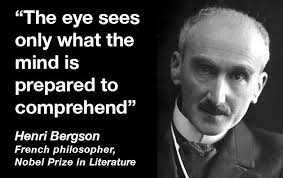
I would like to highlight that our prior knowledge and experiences influence our perception. In other word it means that if we lack knowledge or understanding of something, we might not even recognise it, even if it’s right in from of our eyes. Our brains don’t just passively record visual information; they actively interpret and make sense of it based on what we already know. Example: A seasoned botanist can see different species of wildflowers, while an untrained observer might just see a field of flowers. Aim of this blog was to increase the awareness of bird strike hazards. With this familiarity or knowledge you are more likely to look out for bird then one who is not aware of it.
“The eyes see what the mind knows”
Be Safe. Fly Safe.