A recent violent altercation between an Indian Army Officer and a Ground staff of SpiceJet airline at a high security airport of the nation has drawn widespread attention, prompting police investigations, legal action, and statements from both parties. No matter who is at fault and who is it from or against, violence is not justified. Series of such incidents like in Jan 2024, a pilot of Delhi – Goa, IndiGo flight was assaulted by a passenger or another incident of passenger rage over delayed baggage in Jun 25 at Delhi airport or brawl between airport staff and taxi driver at Mumbai airport or passenger slapped by another passenger suffering panic attack just a week ago, has raised serious concerns of violence and aggression at work place. This blog looks at safety of employees as well as passenger trapped in such a volatile situation.
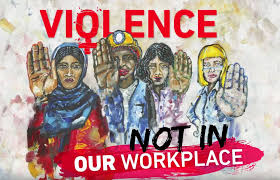
International Labour Organisation says Violence and harassment in the world of work remains a grave unacceptable challenge that too many people continue to be exposed to, and its eradication should unite all employers. It constitutes situations where workers, employers and other people are threatened, bullied, attacked or assaulted at work. Any form of violence and harassment challenges the safety, health and well-being of all persons and can bring physical and mental harm.
Definition of Violence at Work
‘Any incident in which a person is abused, threatened or assaulted in circumstances relating to their work.’
It is important to remember that this can include:
- verbal abuse or threats, including face to face, online and via telephone
- physical attacks
This might include violence from members of the public, customers, clients, patients, service users and students towards a person at work. For violence to be work-related, it must be in connection with the work activity. For example, the following situations would not be included in this definition:
- personal disputes between workers and other people, such as family members
- violence between people not at work, such as customers or service users
Everyone in the world of work, including workers and employers, should be protected from violence and harassment. Providing a safe and healthy working environment is not only a national requirement, it is now a fundamental principle and right at work. Employers should take appropriate steps and measures to mitigate the risks and prevent violence and harassment at work for the persons, places, situations and circumstances within their control.
Impact of violence
Work-related violence can have an impact on both you and your workers, including those who may witness an incident. It can cause:
- injury
- stress and mental health conditions
- disability or death
There can be physical harm, but serious or persistent verbal abuse or threats can also have a serious effect on a worker’s mental health.
For employers, violence can lead to increased staff sickness, poor morale, and a damaged reputation, making it difficult to recruit and keep staff. It can also mean extra cost, with higher insurance premiums and compensation payments. It may translate to enterprise bad name and reputation, reduced investor confidence and poor customer loyalty.
Legal Provisions
Most countries have provisions in work-related legislation that prohibit violence and harassment or some of its forms, and impose obligations on employers to protect workers and prohibit violence and harassment at work. Employers may be liable if their workers attack or harass or are attacked or harassed by a co-worker, client or customer while working or in work-related situations. Violations of the obligations on employers may result in law suits, litigation or claims for compensation. Refer ILO Convention No. 190 and Recommendation No. 206. To fulfil their duty of care, employers should ensure that the workforce is protected from violence and harassment. Employers must conduct a risk assessment and implement necessary measure to protect from work related violence, and they could be liable for such failure. In addition, employers should appoint competent people, set up emergency procedures and provide information and training to workers. Workers, on the other hand, are required to use the information and training they have received, and to report dangerous situations or failings in health and safety arrangements.
Preventive Measures
Often no single control measure will be completely effective on its own and it is best to use a multiple measures and approaches.
- Ensuring good visibility throughout your workplace and providing good lighting to remove blind spots and ensure workers and others can be seen
- Places where tension could grow, for example implementing a suitable queuing system
- Security measures, like CCTV, trained security personnel, body-worn cameras, alarm systems, building security – they can act as a deterrent but also provide evidence for the police to convict offenders
- Adequate Signages and visual displays
- Lone workers or trainees are at greater risk
- Work closely with Government agencies like security, police, local authorities etc.
- Raise awareness with the public to target specific forms of violence
- Communicate clearly about delays and problems
- Ensure adequate staffing levels
- Training – Training can be used to prevent and manage violence. It can provide workers with appropriate skills to reduce or diffuse potential incidents.
- Training should be available to everyone working for at airport and airlines including cleaners and maintenance workers.
- Basic training should include the principles of managing violence, recognise warning signs, relevant verbal and non-verbal skills, identifying underlying and immediate causes
- You might need to include additional training, such as physical intervention techniques, if there is a serious risk of physical aggression towards your workers.
De-escalation techniques
Wherever you work, here are some of the basic techniques you can use to calm situations down and prevent violence and aggression:
- be polite and use a clear, calm voice
- relax your posture and keep your hands by your side
- keep a safe distance and allow personal space
- face the person and maintain eye contact
- show empathy and that you are listening and acknowledging their feelings
- avoid raising your voice and arguing
- offer alternative solutions to their problem so the person has a way out other than aggression
- Trust your instincts. If the situation does not feel safe, and de-escalation is not working, then you could use a diversion tactic, such as advising that you need to check with your manager. If none of these actions help, you could follow your emergency procedures, such as using a panic alarm.
What We NEED TO DO
As per the International Transport Workers Federation (ITF) which represent nearly 16.5 million working men and women in all transport sectors reports that aggressive behaviour experienced by workers is like shouting (70.1%), aggressive posturing (64.7%), swearing (64.3%), threats (63.3%), rude gestures (62%), name- calling (50.7%), and sexual innuendo (23.1%). Other behaviours were reported less frequently such as wounding, kicking, biting, punching, and spitting. There is no such research report available for workers involved in aviation sector. With increase in such incidents after COVID-19 pandemic, it is time to look at them more closely and initiate some measures at national/international level.
- The primary reason could be that all these incidents are not reported due to stigma attached or due to fear of loosing the job.
- The reporting system may not be convenient. Often, reporting such unpleasant incidents are not easy. The procedure may be made user friendly for the victim.
- Inconsistency of consequences as no clear policy defined by regulator or airlines/airport management for misbehaving with staff. Disruptive and Unruly passengers are also let off due to difficulties in reporting and follow up. Airline unable to impose stricter punishment other that No-Fly ban on these passengers.
- Producing evidence of blame is with victim of violence and benefit of doubt is often given to customer/passenger.
- Regular training for managers, employers and workers should be mandatory to recognising signs of third-party violence, de-escalation techniques, proper response protocols and risk evaluation.
- Training needs should be monitored and reviewed regularly and training courses evaluated for their effectiveness.
- Refresher training periodically to ensure workers’ skills are kept up to date.
- Psychological and practical support for workers who experience violence or harassment is necessary.
- Finally, legislative frameworks play a crucial role by establishing the minimum standards that must be included in workplace policies. This is precisely what makes ILO Convention C190 so vital.
Way Forward
Violence and aggression can lead to workers experiencing stress. There is advice on protecting workers from stress and mental health conditions. While employers have primary responsibility for providing a safe and healthy working environment, including a world of work free from violence and harassment, the joint efforts and collective action from government, workers and all actors in the world of work are required. India has not yet ratified ILO Convention 190 (C190), according to the International Labour Organization. While India has ratified 47 other ILO conventions, C190, which addresses violence and harassment in the world of work, is still under consideration.
Recommendation
Considering steep rise in cases of violence in aviation sector, Government of India should enact enabling and supporting laws and legislation for safety and security. In the mean time workers, customers and employers should refrain from violence and harassment, cooperate and contribute to enhance safety and security and make journey as enjoyable as possible for all of us involved and present at the moment.
Sometimes it is more about the journey than the destination.
Be Safe. Fly Safe.