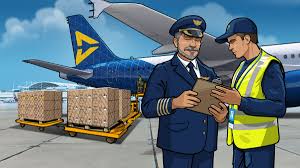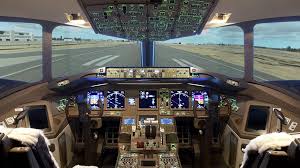
The market of professional education of aviation specialists like pilots, technicians, engineers and flight crew is an important and dynamically developing segment of the educational industry that can offer promising opportunities for training and career development in aviation. The professional education of specialists is a regulatory requirement based on ICAO and national regulator. It requires joint effort of corporates, industry and government. The training is complex multi disciplinary system which requires experts from software, hardware, instructors, academicians, psychologist and aviation specialists. International civil aviation organizations encourage States to priorities the improvement of aviation training as part of national education policies and to actively participate in the development of the civil aviation workforce.
Boeing reports that the global pilot training market was valued at $8.09 billion in 2023 and is projected to reach $20.02 billion by 2030, with a CAGR of 13.8% during the forecast period. In 2022 and 2023, the European pilot training market was valued at $2.02 billion and $2.31 billion, respectively. It is expected that over the next 20 years, the global commercial fleet will require 649,000 new pilots, 690,000 new maintenance technicians, and 938,000 new crew members. (Boeing, 2023)
In India as per DGCA website, there are 38 Flight Training Organisation (FTO) with close to 350 aircraft, 7 aircraft type training organisations (Pilots) and 53 Aircraft Maintenance Engineer CAR 147 (Basic) Training Organisations. These numbers or facilities are inadequate and are unable to meet the present training requirement also. There is regulatory requirement to train aviation personnel – Pilots, AME, Cabin Crew, Flight Dispatchers, Air Traffic Controller and others which includes initial as well as recurrent training to maintain currency. The number of FTOs in India has increased in recent years due to government initiatives and increased demand for pilots. While there are currently 38 FTOs operating at 55 bases, the government has been actively working to establish more flying schools to meet the growing need for pilots, with plans to increase the number of FTOs. Flight training schools require their own airfields away from major air transport centers, airspace for training flights, and instructors who meet strict health, age and skill requirements. Setting up more FTOs training system does not fully meet the needs of air transport organizations for qualified personnel. We need more Aviation Training Complexes.
What is Aviation Training Complex?
The Aviation Training Complex (ATC) is a civil aviation company dedicated to developing and maintaining the professional knowledge, skills and abilities of aviation personnel through the usage of an interactive flight simulator system. ATCs provides theoretical and practical retraining for flight and technical personnel of civil aviation companies and offers comprehensive services in that field. Their technical facilities, training and education programmes enable the airlines-owners to provide airlines’ personnel with such a range of services, as well as to provide these services to other air carriers on a commercial basis. Setting up Aviation Training Complex requires significant expense which may not be feasible for all airlines. In a way it is simpler to set up Aviation Training Complex as compared to FTO as they do not require airfield infrastructure. They can be located next to major airfields thus making them easily accessible for aviation personnel.
When we analyse the global civil aviation industry, we find a limited number of enterprises such as Aviation Training Complex, and fierce competition in the oligopolistic market of aviation simulator manufacturers. Considering the size of Indian aviation market and its projected growth, there is a growing need felt for Aviation Training Complexes that will integrate education, training and research. Aviation Training Complex based on an integration of corporate training centres, industry bodies, and government is the requirement of hour. I am borrowing the term complex as in special economic zone (SEZ). The complex would comprise of interrelated companies, specialized suppliers, service producers, firms in closely related industries, and associated institutions (such as universities, standards agencies, and trade associations) in separate areas that compete but also cooperate. The market for civil aviation training complexes is a set of economic relations between producers, represented by Aviation Training Complex, and consumers, represented by airlines, state civil aviation authorities, and private individuals. It operates based on the laws of the market economy model, including the laws of supply and demand, value, accumulation, and growth of labor productivity. It will also meet the requirement of Indian aspiration in setting up aviation manufacturing hub for civil and defence needs, aviation MRO facility and GIFT city.
The Aviation Training Complex will see further increase in demand due to-
- Growing proportion of international travel
- Use of increasingly complex equipment
- Rising demand of safety and quality personnel
- Increased training requirement for UAV and eVTOL
- increased use of AR/VR will further lead to innovations and affordability
- Increasing demand for Urban Air Mobility
To enhance air transport safety and efficiency worldwide in a cost-effective manner, ICAO implements the TRAINAIR PLUS programme (ICAO, 2024). This cooperative network of civil aviation training centers works together to develop and deliver courses based on ICAO-agreed standardized training package methodology. The programme provides technical expertise, resources, and quality assurance to support both new and existing aviation training centres. The ICAO TRAINAIR PLUS course programme consists of over 200 training packages in nine subject areas, including Aerodromes, Air Navigation Services, Air Transport, Aviation Law, Environment, Flight Safety and Safety Management, Security and Facilitation, Training Competency Development and Aviation Management. As per Aviation Voice As of 2023, there are 186 aviation training facilities worldwide, with 60 in European countries, 25 in North America, 38 in Asia-Pacific, nine in CIS countries, 23 in Africa, 15 in the Middle East region, and 26 in Latin America (Aviation Voice, 2023). The figures are revealing. The Stat and data do not lie. There is a vast requirement of Aviation Training Complexes in region where the aviation travel demand is likely to grow maximum i.e. in Asia-Pacific Region. India does not have even one such training organisation which offers training in all the course programs under ICAO TRAINAIR PLUS. Aviation Voice, also provides the ranking of aviation training centres located all over the world. You will be shocked to see the ranking of Flight Training Organisation of a country which boasts of third largest domestic market in the world.
Conclusions.
The demand for aviation training and related services is increasing and likely to grow in double digit. Asia-Pacific region has huge gap between demand and supply primarily due to insufficient training capacity in terms of infrastructure and staff shortage. Additionally, training of the aviation specialists is a time-consuming process and setting of facilities require high initial investment. Airlines of the region either run their own training centres or outsource to other training centres located in Europe or Middle East. India needs network of private owned independent aviation trainer complexes such as CAE Training Centers and BAA Training Centers.
Be Safe. Fly Safe.